
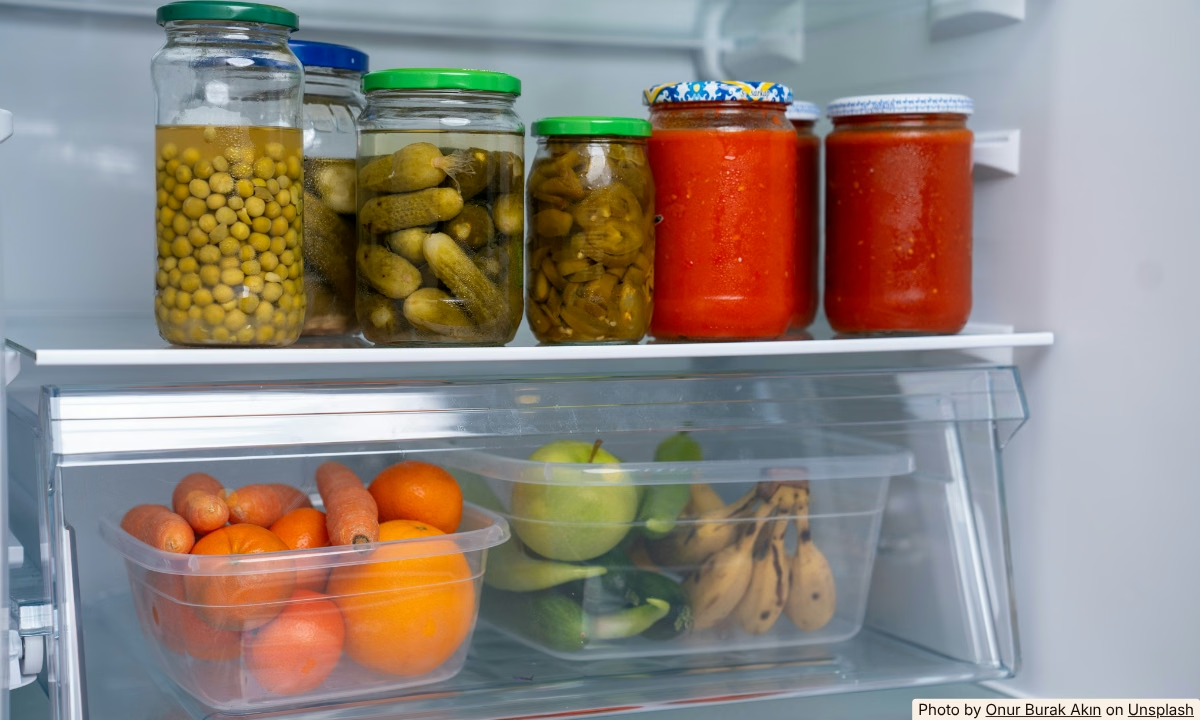
Post-World Cup party leftovers can realistically become 3-4 weeknight dinners by matching what you have to a handful of flexible ‘hero recipes’, like fried rice, salsa-simmered chicken, or a fridge-clearing soup, before anything expires. The average American throws out roughly $728 worth of food per year, and a single party fridge is a concentrated version of that problem, solvable in one focused evening.
Your fridge right now is a crime scene. Half a tray of mac and cheese, a bowl of salsa with a suspicious film on top, some ground beef that needs to move today, a bag of burger buns doing their best to hang on. The World Cup was fun. The aftermath is $40 of food that has about 72 hours before it becomes a very expensive compost pile.
Here’s the good news: that fridge is actually three or four dinners waiting to happen, and turning leftovers into meals takes about 20 minutes of planning and costs you nothing but the willingness to eat tacos twice this week (which, honestly, is not a hardship).
The average American throws out roughly $728 worth of food per year (EPA). A post-party fridge is that problem compressed into one refrigerator shelf. The fix is: know what you have, match it to a handful of flexible recipes, and eat it before it spoils.
Key Takeaways:
- The average American wastes roughly $728 worth of food per year, and post-party fridges are one of the highest-risk moments for that waste to spike.
- Flexible ‘hero recipes’, fried rice, stir-fry, soup, are designed to accept almost any leftover ingredient, making them the most reliable tool for zero-waste cooking after a big event.
- Simmering chicken thighs in leftover salsa for 20 minutes produces a shred-ready protein base for tacos or burrito bowls, turning a condiment you’d otherwise discard into the main event.
- Labeling and dating leftovers with a permanent marker and painter’s tape eliminates the freshness guessing game and reduces the chance of throwing out food that’s still good.
- Stale cornbread cubed, toasted at 350°F for 10 minutes, and tossed with tomatoes and cucumber becomes a Southern-style bread salad, a full side dish from something most people would bin.
Step One: Do a 10-Minute Fridge Audit Before You Touch Anything
Pull everything forward. Not just the obvious party food, the stuff lurking in the back too. You’re looking for four categories: proteins, produce, sauces and condiments, and carbs. Write them down on a sticky note or your phone. Actually write them down. “Do a mental inventory” is how you end up buying another bag of shredded cheese when there are two in the fridge already. I’m speaking from experience.
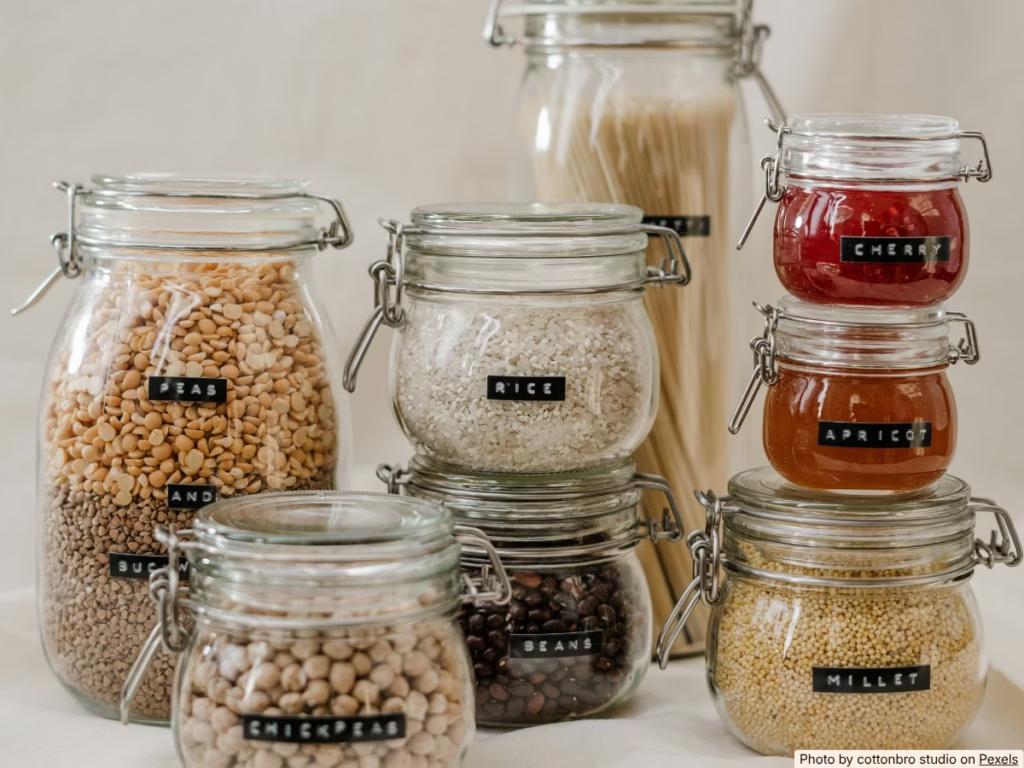
Once you can see what you have, do two things immediately. First, move anything that expires in the next two days to the front of a dedicated shelf. That’s your “use first” zone, the stuff that gets priority in tonight’s and tomorrow’s dinner. Second, label everything you’re keeping with a piece of painter’s tape and a permanent marker. Chef Margaret Li recommends this exact approach, per NPR, date it, name it, done. No more opening a container and playing “is this still okay?” roulette.
A typical post-World Cup fridge audit might surface: leftover ground beef or chicken, a half-empty jar of salsa, some wilting tomatoes, burger buns going stale, maybe the remnants of a mac and cheese situation, a few vegetables, and condiments you opened for the party and won’t touch again for six months. That’s dinner for the next three days.
The Hero Recipe Concept: How to Turn Leftovers Into Meals Without a Grocery Run
The mistake most people make with leftovers is hunting for a specific recipe that matches exactly what they have. You Google “what to do with leftover salsa and ground beef” and end up in a 47-tab spiral that ends with you ordering pizza.
The better move is building a small arsenal of what food researchers call “hero recipes”, flexible dishes designed to accept almost any combination of ingredients, per NPR. These are your workhorses. They don’t care what you have. They just need something from each category: a protein, a vegetable or two, a carb, and some kind of sauce or seasoning. The specific ingredients are interchangeable.
Your five hero recipes are: fried rice, stir-fry, soup or stew, tacos or burrito bowls, and pasta toss. Memorize those five. Everything in your post-party fridge fits into at least one of them.
This also changes the psychology of the whole thing. Treating leftover cooking as a creative experiment rather than a guilt-driven chore makes a measurable difference in how often people actually follow through, per NPR. You’re not trying to “save” the food out of obligation. You’re trying to build something good out of what you’ve got. We claim Iron Chef energy, not food-guilt energy.
These are the backbone of zero waste home cooking, and you don’t need a recipe for each one, just the pattern.
The 20-Minute Salsa Chicken That Saves the Week
If you have leftover salsa and any form of chicken, thighs, breasts, even rotisserie, this is your move. Put the chicken in a pan, pour the salsa over it, cover, and simmer over medium-low heat for 20 minutes. That’s it.
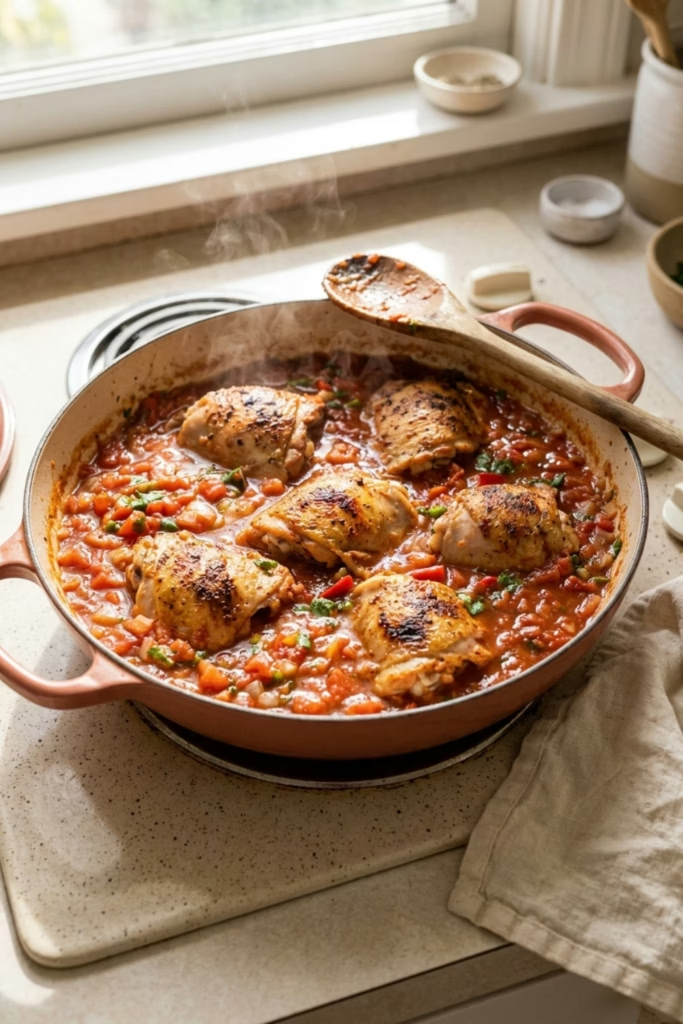
The chicken becomes tender enough to shred with two forks, and it tastes better than you might think. The salsa you were going to throw out because it’s been open for three days is now the sauce for tacos, burrito bowls, or enchiladas.
The technique works because the acid in the salsa does the tenderizing work while the heat concentrates the flavor. Old salsa is actually better for this than fresh. It’s already broken down a bit, which means more flavor in less time.
Serve it in leftover tortillas (flour tortillas have excellent fridge longevity, stuff them with the shredded chicken, any roasted vegetables you have, and whatever rice is left), and you’ve turned two things that were about to die into a full meal for under the cost of one delivery order.
If you ended up with leftover steak from the party instead of chicken, the same logic applies, slice it thin, warm it in whatever sauce you have, and it’s taco filling in five minutes.
What to Do With the Carb Situation
Burger buns, stale cornbread, leftover mac and cheese, half a bag of chips: the carb aftermath of a World Cup party is real and it’s specific. Here’s what to do with each.

Burger buns: Don’t throw them out and don’t eat them plain. Cube them, toast them in a dry pan or oven, and use them as croutons for a salad or a soup topper. They’re also the base for a quick bread pudding if you have eggs and milk. For more on what to do with leftover hamburger buns, there’s a full breakdown worth bookmarking.
Stale cornbread: Cube it, toast it at 350°F for 10 minutes, and toss it with diced tomatoes, cucumbers, and a simple vinaigrette. That’s a Southern-style bread salad, a full side dish from something most people would toss without a second thought, per Pamela Salzman. The toasting step is non-negotiable; it gives the cornbread enough structure to hold up to the dressing without turning to mush.
Leftover mac and cheese: Roll chilled mac and cheese into balls, coat them in breadcrumbs, and pan-fry or bake until golden. This technique was specifically highlighted for World Cup 2026 party food, per UP Magazine, and it works because cold mac and cheese holds its shape well enough to form into balls without falling apart. Gooey inside, crispy outside, and they disappear faster than the original dish did.
Enjoying this?
Eat more of what you buy.
One short email a week. Preservation tricks, ingredient deep-dives, and the small kitchen habits that can quietly save $700+ a year on food waste. Pinky promise: no spam.
Leftover pasta of any kind: Toss it with hummus thinned with a splash of pasta water (or plain water), cherry tomatoes, cucumber, and crumbled feta for a creamy, protein-packed bowl that uses up multiple leftovers at once, per Pamela Salzman.
The Fridge-Clearing Soup You Don’t Need a Recipe For
If you’ve done the audit and you have a collection of vegetables that don’t obviously go together, make soup. This is not a cop-out. Soup is one of the most forgiving things you can cook, and it’s specifically designed to absorb odds and ends.
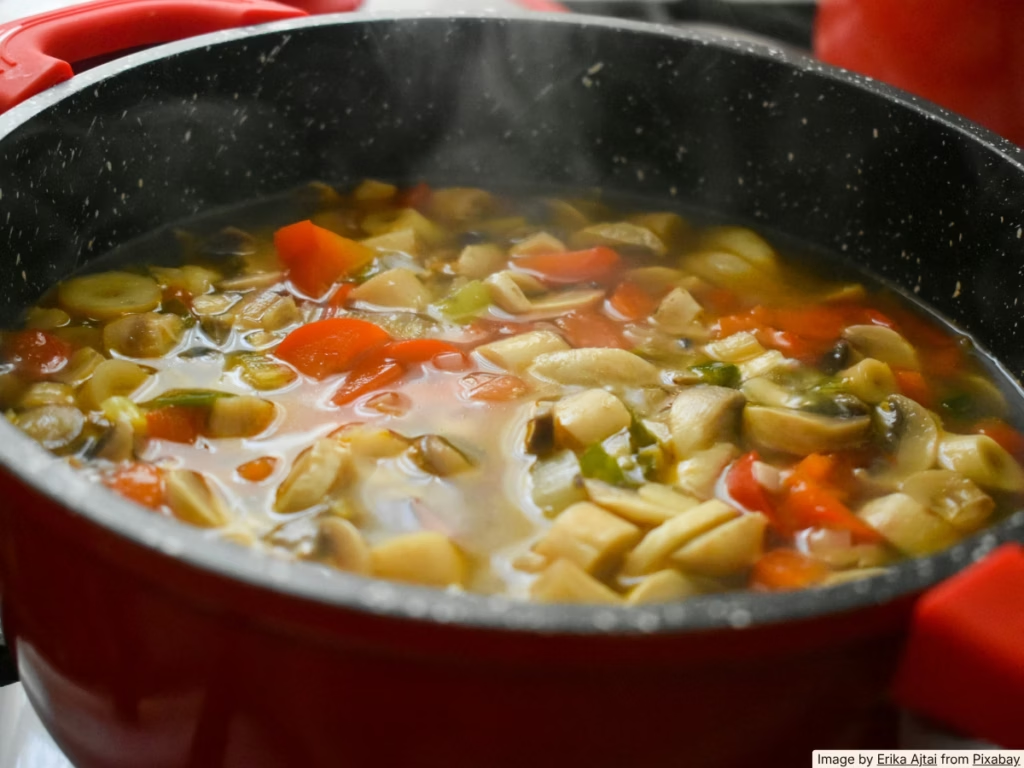
Start with onion and garlic in a pot with some oil. Add whatever vegetables you have, cut roughly the same size so they cook at the same rate. Add broth or water. Add any beans or cooked grains you have. Season with salt, pepper, and whatever spices you opened for the party. Simmer for 20-30 minutes.
If you have beets in there, you’re accidentally making something close to Barszcz Ukraiński, a sweet and sour beet soup that’s traditionally built around exactly this kind of “whatever’s in the fridge” approach, accepting beans, various vegetables, and meat, topped with boiled potatoes, hard-boiled eggs, or a spoonful of sour cream, per WCMU. It’s a centuries-old hero recipe. You’re in good company.
Soup also freezes perfectly. If you make a big pot and can’t eat it all this week, portion it into labeled freezer bags and you’ve bought yourself a future Tuesday night dinner with zero effort required.
The Freezer Move You Should Make Tonight
Before you go to bed tonight, look at what’s in your fridge that won’t realistically be eaten in the next two days. That food doesn’t have to spoil. It just needs to be paused.
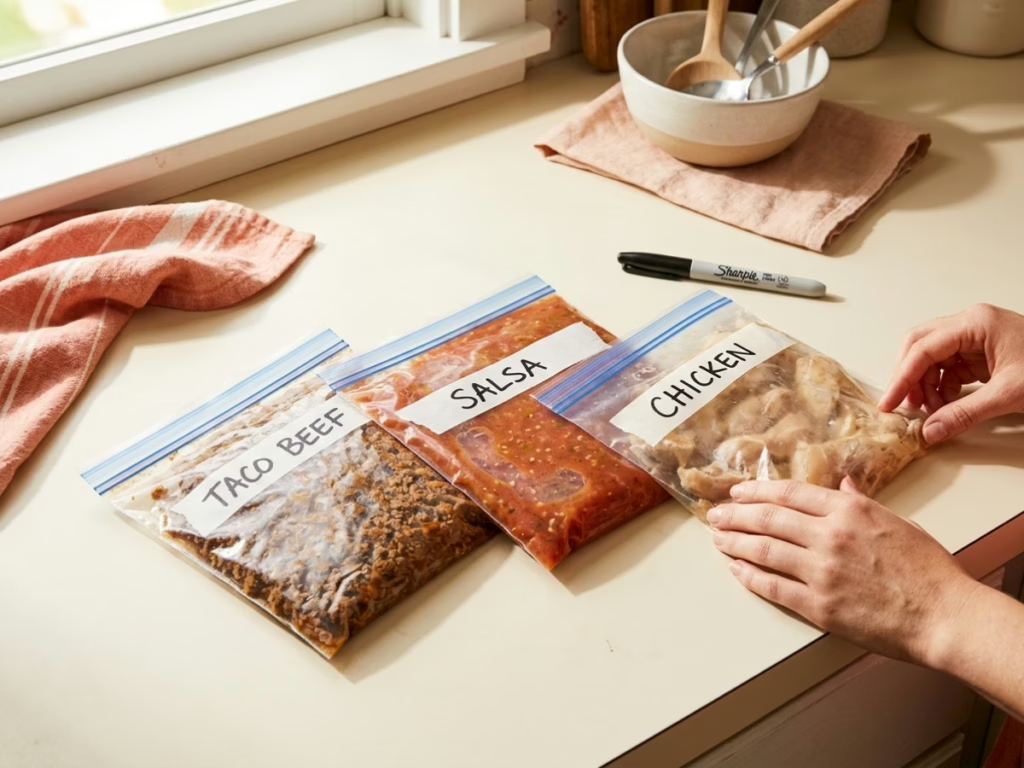
Ground beef that’s been in the fridge since the party? Cook it with some seasoning and freeze it, it’s already halfway to taco meat, a pasta sauce, or a leftover burger skillet hash. Cooked chicken? Shred it and freeze it in portions. Bread that’s going stale? Freeze it now, before the mold starts (we listen and we don’t judge). Even the remaining salsa can go into a freezer bag, it’s basically a ready-made sauce for the next time you want to do the 20-minute chicken simmer.
The freezer is a pause button, not a graveyard. The food that goes in tonight is money you’ve already spent, preserved until a week when you need it.
Pantidy, available on iOS and Android, tracks everything across your fridge, pantry, and freezer in one place, including expiration dates, and shows you which of your saved recipes you can actually make with what you have right now. So the next time you’re staring at a post-party fridge at 6pm, it tells you what to cook instead of leaving you to figure it out from scratch. Try it free for 14 days, then $5 a month.
Know Your Windows: What Needs to Move First
Not everything in your fridge is on the same timeline. A quick triage:
Ground beef that’s been in the fridge since the party needs to be cooked or frozen today or tomorrow, it has a short window. Chicken breast is similar. Lettuce and fresh tomatoes are going to start showing their age by mid-week. Eggs, cheddar cheese, and onions have more runway, they’re not your emergency.
Knowing the order lets you build your meal plan around urgency rather than preference. Tonight’s dinner uses the ground beef. Tomorrow uses the chicken. Wednesday’s soup uses the vegetables that are starting to look tired. By Thursday, you’re eating from the more durable stuff, and you haven’t thrown out a single thing.
Frequently Asked Questions
How long do party leftovers actually last in the fridge?
Most cooked proteins, chicken, ground beef, anything that was grilled or pan-cooked, are good for 3 to 4 days in the fridge when stored in a sealed container, per USDA food safety guidelines. Cooked pasta and rice are similar. Sauces and dips like salsa or guacamole vary, but 3 days is a reasonable window for most. When in doubt, the label-and-date method (painter’s tape, permanent marker) tells you exactly when something went in, so you’re not guessing.
What are the best “hero recipes” for using up mixed leftovers?
Fried rice, stir-fry, soup or stew, tacos or burrito bowls, and pasta toss are the five that work for almost any combination of ingredients. The key is that each of these accepts a protein, a vegetable, a carb, and a sauce interchangeably, so the specific leftovers you have don’t matter much. Flexible “hero recipes” like these are specifically recommended by food waste researchers as the most reliable tool for zero-waste home cooking, per NPR.
Can I freeze leftover party food that’s already been sitting in the fridge for a day or two?
Yes, as long as it’s still within its safe fridge window (3-4 days for most cooked proteins and dishes). Freeze it in labeled portions, single-serving bags make future weeknights much easier. Cooked ground beef, shredded chicken, soups, and sauces all freeze well. Salads, anything with fresh lettuce, and dishes with a lot of dairy don’t hold up as well after freezing.
What do I do with leftover buns and bread that are going stale?
Cube them and toast them in the oven at around 350°F for 10 minutes, they become croutons for salads or soup toppers. Stale cornbread specifically works well as the base for a bread salad: toast the cubes, then toss with diced tomatoes, cucumber, and a simple vinaigrette. Burger buns can also go into a quick bread pudding if you have eggs and milk. Bread that you won’t use in the next day or two should go straight into the freezer before it molds.
Is leftover cooking actually worth the effort, or is it faster to just buy something new?
The math is pretty clear: if your post-party fridge has $40 of food in it and you throw half of it out, that’s $20 gone for nothing. Three dinners from what you already have costs you roughly an hour of cooking across the week and saves you at least one grocery run. The mindset shift that actually makes it sustainable is treating it as a creative exercise rather than an obligation, approaching the fridge like a challenge rather than a chore makes a real difference in follow-through, per NPR.
One Thing to Do Right Now
Open your fridge, pull everything forward, and find the one protein that has the shortest window. If it’s chicken or beef, it’s going into the salsa simmer tonight or into the freezer in the next hour. If it’s already cooked, it’s taco filling tomorrow.
That’s it. One item, one decision, one dinner saved. The rest of the fridge can wait until tomorrow, but that protein can’t.
The $40 of food in your fridge right now is not a problem. It’s a head start.
Food Waste Calculator
How much food are you throwing away?
The average household wastes about 30% of the food they buy. See what that costs you.
You’re throwing away about
$0
per year in wasted food
Pantry + Recipes
From "What's in the Fridge?" to Dinner in Minutes
Pantidy is a smart pantry app on iOS and Android that tracks what you have, flags what's expiring, and matches your inventory to recipes you've already saved.
- See every recipe you can make right now
- Filter for recipes that use expiring items first
- Check ingredient match percentages at a glance
- Add missing items to your shopping list in one tap