
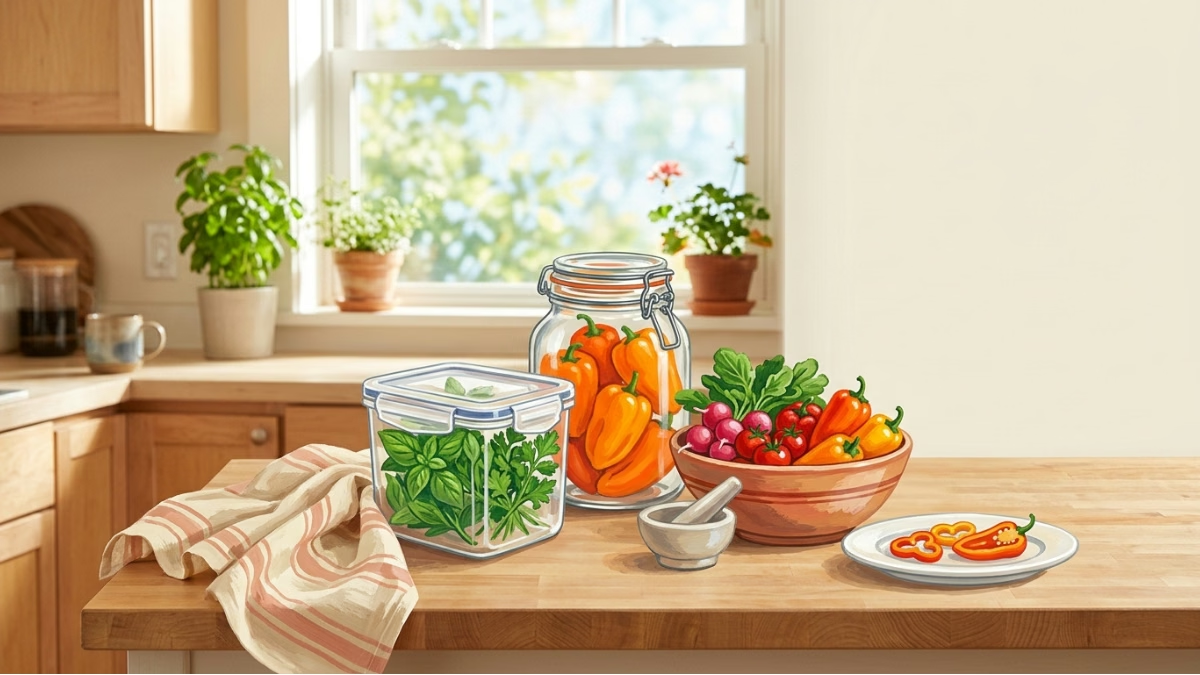
The best kitchen gadgets to reduce food waste are not the flashiest ones on the shelf. They are the ones that keep food edible long enough for you to actually eat it. Five tools do most of the heavy lifting: airtight storage containers, a vacuum sealer, freezer organization bins, a fridge thermometer, a countertop food recycler. The first three prevent waste before it starts. One makes sure your fridge is doing its job in the first place. One is for when something slips through anyway. (It happens.)
Here is how each one works, what it actually costs you, and which one to buy first.
Key Takeaways:
- Airtight containers and reusable bags extend the shelf life of most foods and are among the lowest-cost, highest-impact waste-prevention tools available.
- The Mayo Clinic recommends freezing leftovers that won’t be eaten within 3 days and keeping frozen food labeled and organized to prevent freezer-burn waste.
- Prevention beats disposal, a gadget that keeps food edible longer saves more money than one that processes food after it’s already gone bad.
- Whole spices can last 2 to 4 years and ground spices up to 3 years at room temperature per USDA guidance, so the right storage containers can eliminate a common pantry replacement cost.
- Pantidy is a smart pantry app on iOS and Android that tracks expiration dates, matches your inventory to your saved recipes, and shows you what to use before it goes bad, free to try for 14 days.
Why Most Kitchen Gadgets to Reduce Food Waste Miss the Point
The sustainable-kitchen product world has a branding problem. A lot of what gets marketed as a food-waste solution is really a food-disposal solution. Composters, food recyclers, scraps bins, they are all useful, but they solve for the end of the problem. The food is already dead. You are just choosing where to send the body.
The real money is in prevention. A gadget that keeps your spinach alive four extra days, or your chicken breast usable through Thursday instead of Tuesday, is doing more financial work than any composter. The average American throws out roughly $728 worth of food per year, per the EPA. For a family of four, that number is closer to $3,000. Most of that loss happens before anyone decides to compost anything, it happens in the fridge, quietly, while you are ordering pizza.
So this list is ranked by impact, not aesthetics. The first three gadgets are prevention tools. The last two handle what slips through.
Gadget 1: Airtight Storage Containers (The One You Already Know You Need)
You probably own some version of these. The question is whether the ones you own are actually airtight, meaning the lid creates a real seal, not just a “close enough” snap. That distinction matters more than the material, the brand, or whether they stack nicely.
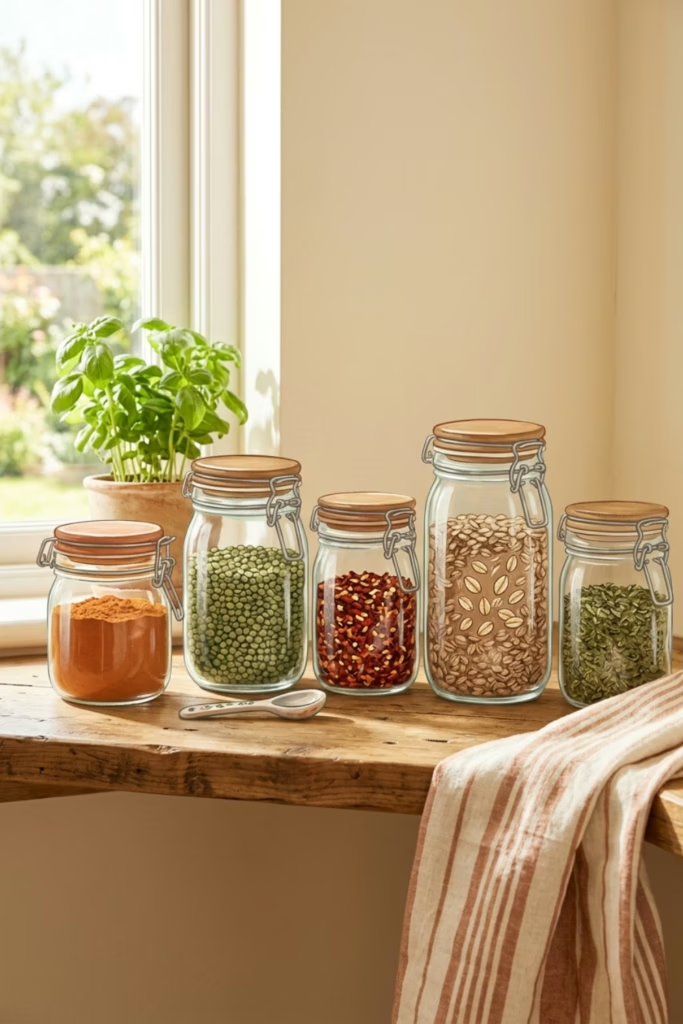
Airtight canisters and reusable bags can meaningfully extend the life of most foods, making them the lowest-cost, highest-impact tool in this list, per CNET. That applies to dry goods as much as fresh food. Ground spices last up to 3 years and whole spices 2 to 4 years at room temperature per USDA guidance, per EatingWell, but only if they are stored in airtight containers away from heat and light. Most people are throwing out spices that are not actually bad, just improperly stored. That is a quiet, recurring cost that airtight containers eliminate.
For produce, the logic is the same. he same principle applies to meal prep storage containers: batch-cooked grains, proteins, and chopped vegetables last measurably longer when sealed properly than when covered loosely or left in the pot.
Lettuce stored in an airtight container with a dry paper towel lasts significantly longer than lettuce left in the bag it came in. Strawberries stay firm days longer in a sealed container versus a clamshell with ventilation holes. The container is not doing anything magical. It is just controlling moisture and airflow, which is what kills most produce in the first place.
What to look for: a lid that you have to press down to seal, not one that just rests on top. Glass is durable and does not absorb odors. BPA-free plastic is lighter and cheaper. Either works. The seal is the only spec that matters.
Gadget 2: A Vacuum Sealer
This is the one that feels like overkill until you use it once and realize you have been leaving money in the freezer for years.
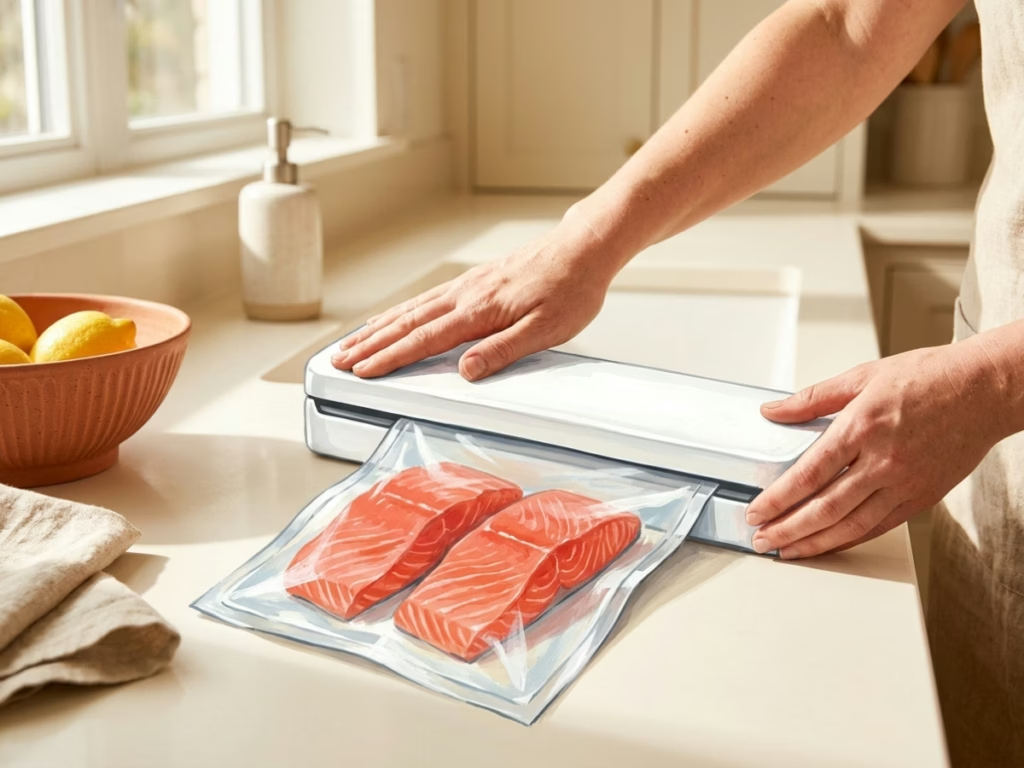
Vacuum sealing removes the air from the bag before you freeze something, which is what causes freezer burn. Freezer burn is not a safety issue, it is a quality issue that makes food taste wrong and eventually gets it thrown out. The Mayo Clinic recommends freezing leftovers that will not be eaten within three days, and keeping frozen food labeled and organized so nothing gets lost. A vacuum sealer makes both of those habits actually work.
Here is the practical version: you buy salmon on sale, portion it into two-serving bags, vacuum seal them, and freeze them. Properly vacuum-sealed fish in the freezer lasts months without quality loss. The same fish in a zip-lock bag with air in it gets freezer-burned in a few weeks and ends up in the trash. Same fish. Very different outcome.
The behavior shift vacuum sealing creates is the interesting part. When you know food will actually survive the freezer in good shape, you start using the freezer more aggressively. Bread going stale? Freeze it. Ground beef on sale in bulk? Portion and seal it. Leftover tomato paste from a recipe that called for two tablespoons? Seal the rest instead of letting it turn gray in the fridge. That is the compounding effect: one gadget changes how you shop, how you cook, and how much you throw out.
Entry-level vacuum sealers run under $40. The bags are the ongoing cost, though reusable options exist. Either way, one avoided grocery run covers it.
Gadget 3: Freezer Organization Bins
The freezer is the most underused money-saving tool in most kitchens, and the reason is visibility.
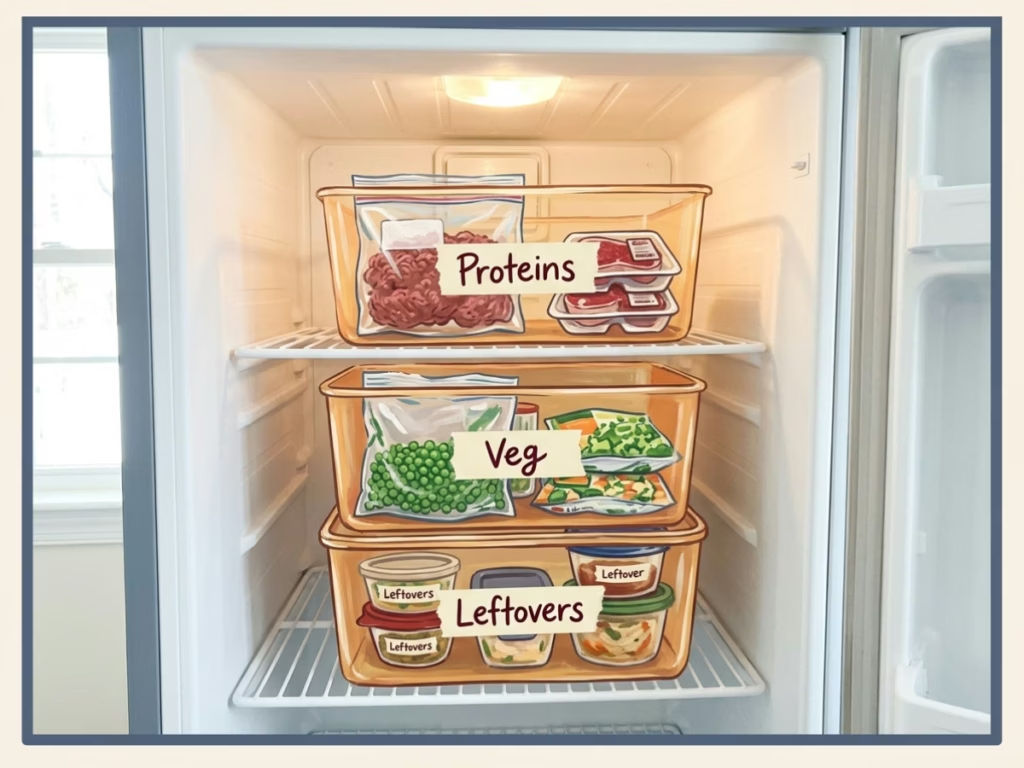
Things go in and do not come back out until they are unrecognizable. We have all found something in the back corner of the freezer that we cannot identify and are not willing to gamble on. Into the trash it goes.
Freezer organization bins solve this by creating zones. Proteins in one bin, vegetables in another, leftovers in a third. When you open the freezer, you can see what is there without pulling everything out and stacking it on the counter. The Mayo Clinic specifically flags this: frozen food that is not organized and labeled gets lost to freezer burn and eventually discarded. The bin is just a physical system for the habit they are recommending.
Stack bins vertically in upright freezers. Use flat, stackable containers for chest freezers so you can actually reach the bottom. Label everything with masking tape and a marker, not a special label, just tape and a marker. Date it. Done.
The secondary benefit is that organized freezers run more efficiently because cold air circulates better when there is structure. That is a minor point, but it is a real one.
Enjoying this?
Eat more of what you buy.
One short email a week. Preservation tricks, ingredient deep-dives, and the small kitchen habits that can quietly save $700+ a year on food waste. Pinky promise: no spam.
If you want to go one step further, Pantidy tracks what is in your freezer alongside your fridge and pantry, available on iOS and Android, so you have a running inventory that tells you what is in there before you buy more of it. The number of times we have bought a second bag of frozen peas because we forgot about the first one is, frankly, embarrassing. Try Pantidy free for 14 days, then $5 a month.
Gadget 4: A Fridge Thermometer
This one costs about $8 and is the most boring item on this list.
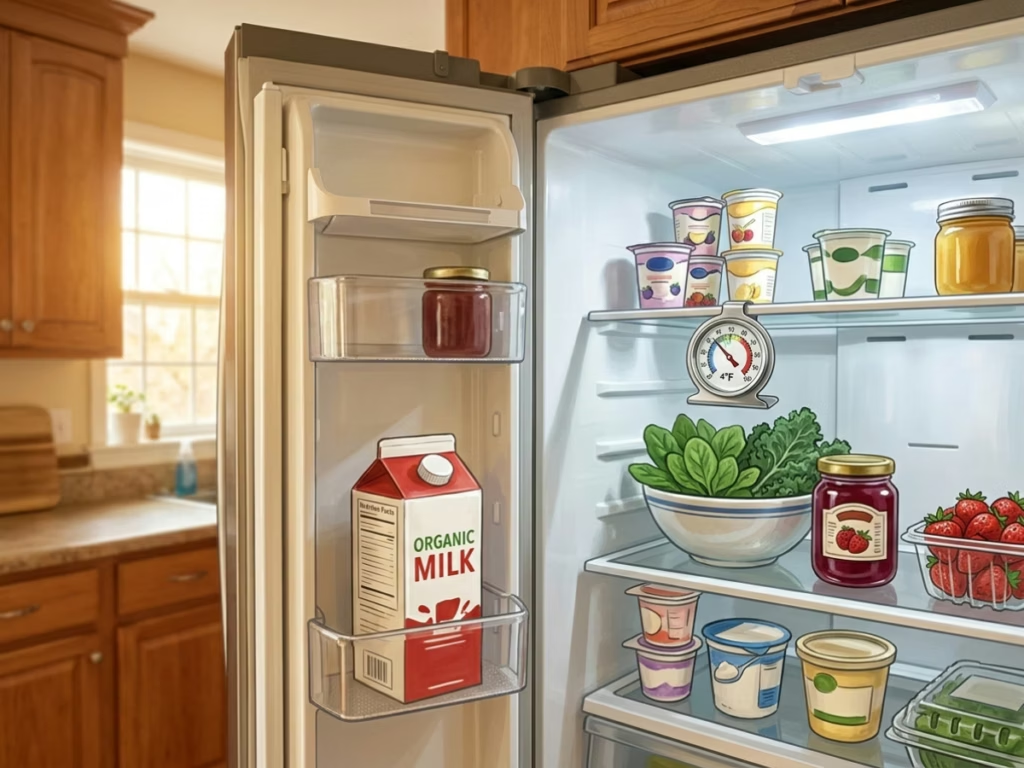
It is also the one most likely to reveal a problem you did not know you had.
The FDA recommends keeping your fridge at 40°F or below and your freezer at 0°F. A fridge running at 44 or 45°F is not dramatically warmer, but it is spoiling your food measurably faster. Milk that should last a week goes in five days. Yogurt that should last three weeks past its sell-by date gets questionable by week two. Eggs that should be fine for a month start to feel like they need the float test. You are not imagining it, the fridge is just running warm, and you are absorbing the cost in food you throw out early.
Most fridge thermometers are not accurate. The one built into your fridge is probably the least accurate of all. An inexpensive standalone thermometer tells you the real temperature so you can adjust the dial. If your fridge is running warm, turn it down. If it is running cold enough to freeze your lettuce (also a problem), turn it up. Eight dollars, five minutes, done.
This is the gadget that makes all the other gadgets work better. Airtight containers and vacuum sealing extend shelf life, but only from the baseline your fridge temperature establishes. Fix the baseline first.
Gadget 5: A Countertop Food Recycler or Compost Bin
Here is where the composters earn their spot, at the end of the list, not the beginning.
Even with great storage habits, some food waste is unavoidable. Eggshells, coffee grounds, vegetable peels, the outer leaves of cabbage. A countertop compost bin gives that material somewhere to go that is not a landfill. A small, lidded bin with a carbon filter keeps smells contained and makes the habit easy enough to actually stick to. The Mayo Clinic recommends small home composting containers specifically as a practical tool for keeping scraps out of the trash.
If you want to go further, countertop food recyclers like the Mill or the Lomi take actual food waste, not just scraps, and process it into something useful. Pela’s Lomi claims it can reduce a household’s food waste by up to 80%, per Inverse, which is a strong number if your waste problem is already at the disposal stage. These appliances run significantly more than a simple compost bin, so they make the most sense once you have already tightened up your storage and shopping habits. Buying a $400 food recycler before fixing a 44°F fridge is solving the wrong problem first.
For most households, a simple countertop compost bin is the right call. It handles the unavoidable scraps, costs almost nothing, and takes about thirty seconds to empty into an outdoor bin or a municipal compost pickup. BOOM. Scraps handled.
The Gadget That Is Not a Gadget
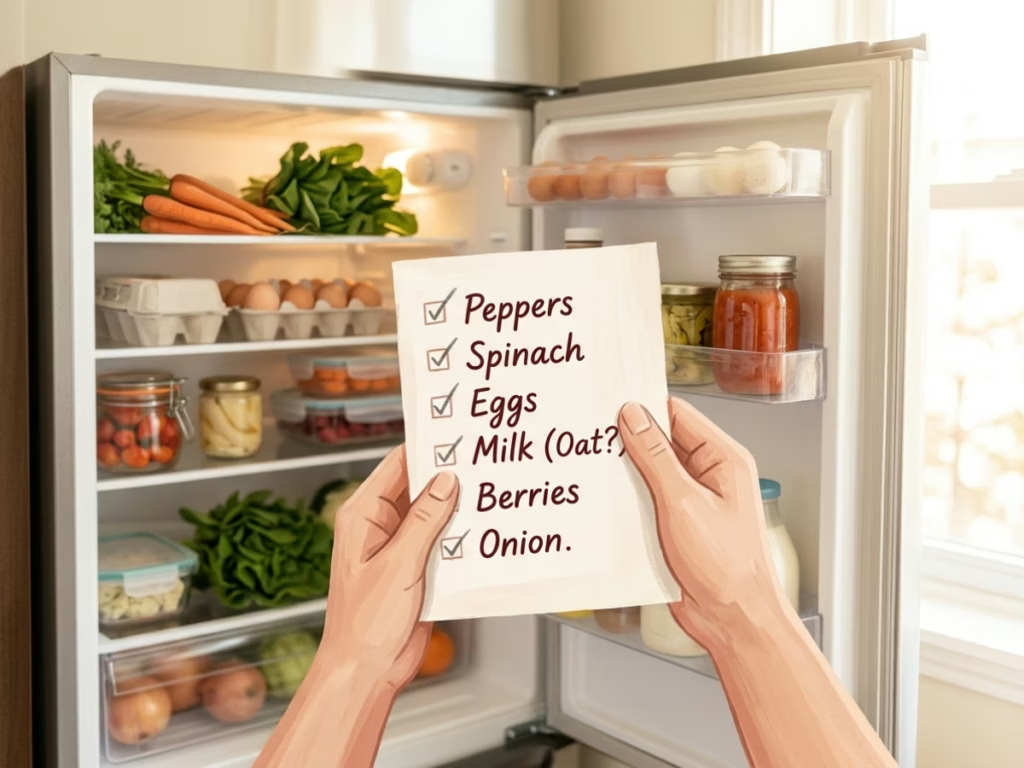
The Mayo Clinic makes a point that does not show up in any product roundup: checking your pantry, fridge, and freezer inventory before you shop is one of the most effective waste-reduction moves you can make. It is not a gadget. It is a habit. But it is the habit that determines whether your gadgets do anything useful.
If you buy a vacuum sealer but still come home from the store with duplicate chicken because you forgot what was already in the freezer, the sealer cannot save you. If you have airtight containers but no sense of what is expiring this week, the containers are just delaying the same outcome.
This is what Pantidy is built for: it tracks your pantry, fridge, and freezer inventory with expiration dates, and matches what you have to recipes you have personally saved, so when you open the app before a grocery run, you can see exactly what needs to be used first. It runs on iOS and Android, and the shopping list it generates is built around what you already own. The eat-down-the-pantry approach works a lot better when you can see the whole picture in one place.
Frequently Asked Questions
What is the most effective kitchen gadget for reducing food waste?
For most households, airtight storage containers have the highest impact per dollar because they extend the shelf life of both fresh food and pantry staples, making them a low-cost, high-return waste-prevention tool. A fridge thermometer is a close second, if your fridge is running above 40°F, every other storage tool is working against a handicap.
Do countertop food recyclers actually work?
Yes, for what they are designed to do: processing food scraps and waste into compost or compost-like material. Pela’s Lomi, for example, claims up to 80% reduction in household food waste, per Inverse. The caveat is that they work best as a disposal solution, not a prevention solution. They handle waste that has already happened, not waste that is still preventable. If your goal is saving money, prevention tools like vacuum sealers and airtight containers will return more per dollar.
How long can I keep leftovers in the freezer?
The Mayo Clinic recommends eating frozen leftovers within 3 to 4 months for best quality, and keeping them labeled and organized so they do not get buried and forgotten, per Mayo Clinic. Vacuum sealing before freezing extends that window and protects against freezer burn.
Can a vacuum sealer really save me money?
It depends on how you use your freezer. If you currently avoid freezing things because they come out with freezer burn, a vacuum sealer changes that calculation by removing the air that causes it. The payoff is biggest if you buy proteins in bulk when they are on sale, or if you regularly freeze leftovers. The upfront cost is typically under $40 for an entry-level model.
What temperature should my fridge be to reduce food waste?
The FDA recommends 40°F or below for the fridge and 0°F for the freezer. A fridge running warmer than that spoils food faster than the dates on the packaging assume, which means you are throwing things out before they actually need to go. An inexpensive standalone fridge thermometer, around $8, gives you the real number so you can adjust accordingly.
One Thing to Do Today
Open your fridge right now and check the temperature. If you do not have a thermometer, order one, it takes about thirty seconds and costs less than a bag of spinach. While you are in there, pull everything forward and look for the three things most likely to go bad this week. That is your dinner plan for tonight sorted.
The gadgets in this list work. But they work best when you can see what you have before you buy more. That is the whole game.
Food Waste Calculator
How much food are you throwing away?
The average household wastes about 30% of the food they buy. See what that costs you.
You’re throwing away about
$0
per year in wasted food
Pantry + Recipes
From "What's in the Fridge?" to Dinner in Minutes
Pantidy is a smart pantry app on iOS and Android that tracks what you have, flags what's expiring, and matches your inventory to recipes you've already saved.
- See every recipe you can make right now
- Filter for recipes that use expiring items first
- Check ingredient match percentages at a glance
- Add missing items to your shopping list in one tap