
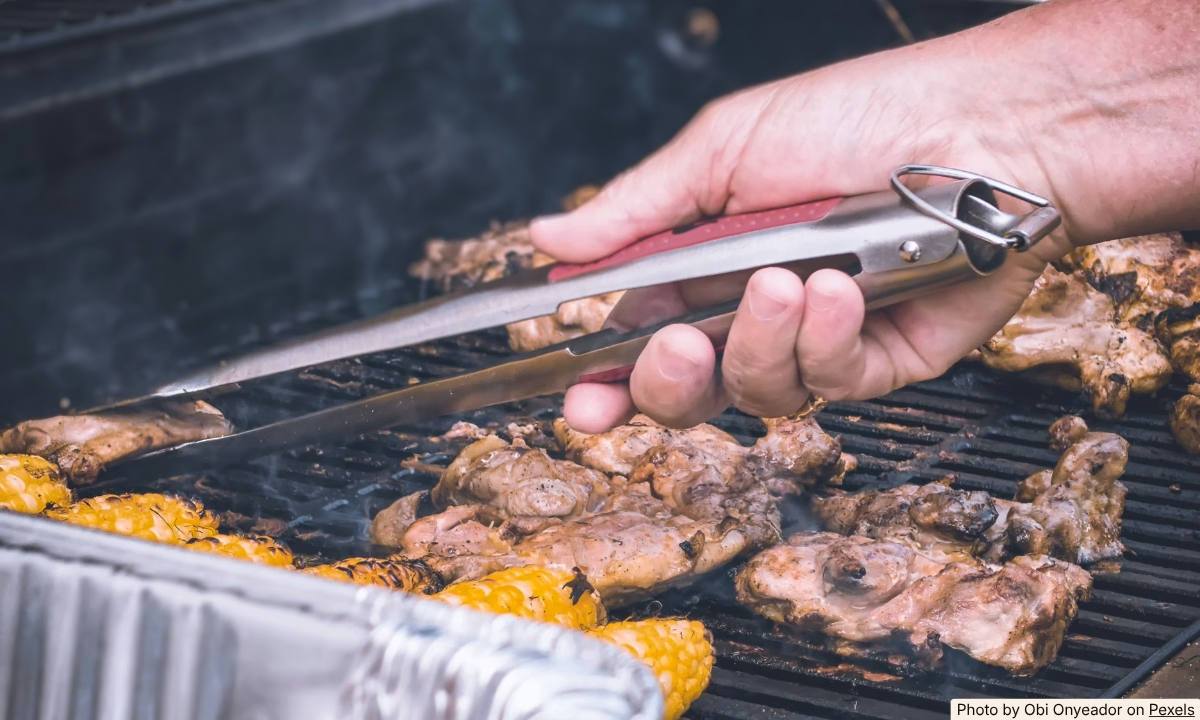
Hosting a July 4th BBQ for 10 people under $50 is achievable by swapping ground beef for chicken breast, buying two-liter soda bottles instead of cans, and leaning on low-cost sides like potato salad and watermelon, cutting the $73.82 national average by 32%.
This guide covers how to host a July 4th BBQ for 10 people under $50. The American Farm Bureau Federation’s 2026 Summer Cookout Cost Survey puts the average July 4th BBQ for 10 people at $73.82 this year, and you can cut that by 32% with three specific swaps: replace ground beef with chicken breast, buy two-liter soda bottles instead of cans, and build your sides around potato salad and watermelon, both of which actually got cheaper in 2024.
Key Takeaways:
- The American Farm Bureau Federation puts the average July 4th cookout for 10 at $73.82 in 2026, a 4% increase from 2025.
- Swapping ground beef for chicken breast is the single biggest lever: chicken prices fell in 2024 while beef rose roughly 30% since 2019.
- Switching from 20 individual soda cans (~$12) to two 2-liter bottles (~$6) saves $6 per party, a small swap with a real impact on a sub-$50 budget.
- Cooking burgers at home instead of ordering from a quick-service restaurant saves approximately $15-$20 per pound of meat for a 10-person party.
- Regional prices vary by up to $17: the cheapest average cookout for 10 is $63.54 in the Northeast; the most expensive is $80.88 in the West.
Why $73.82 Is the Number to Beat
The Farm Bureau didn’t pick $73.82 out of thin air. That’s the real cost of a traditional cookout: ground beef patties, hot dogs, pork and beans, potato chips, lemonade, and a few other staples, priced at national averages. It’s up 4% from 2025, which tracks with overall inflation, so there’s no single villain here. Just a slow creep.
The problem is that the “traditional” menu was never optimized for cost. It was optimized for habit. Ground beef is what people picture when they picture a cookout, but ground beef prices have climbed roughly 30% since 2019 while chicken breast prices actually declined in 2024. Nobody updated the default menu. We’re going to.
Getting to under $50 requires a 32% reduction from the national average. That sounds like a lot until you see where the money is actually going. Meat and drinks are the two categories where most of the waste lives, and both are fixable with swaps that your guests will not notice, and may actually prefer.
The Menu That Gets You There
Here’s the full menu, built to feed 10 people comfortably, with no item that requires a culinary degree or a sous vide machine.
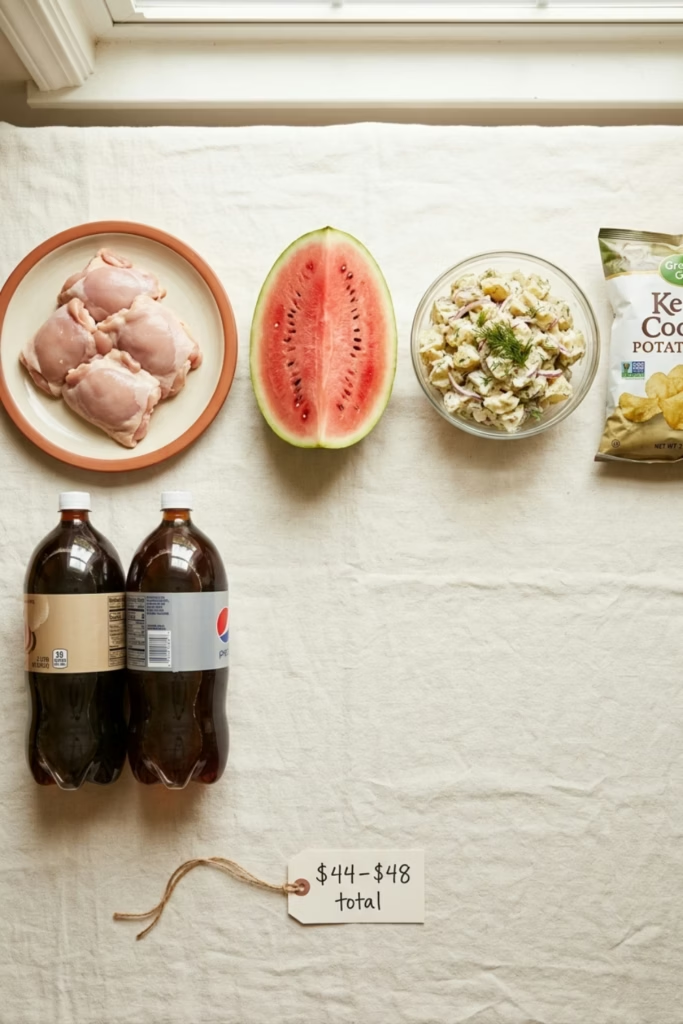
Main: BBQ chicken sandwiches (3 lbs boneless chicken thighs or breast, BBQ sauce, buns)
Side 1: Classic potato salad (5 lbs potatoes, mayo, mustard, celery, eggs)
Side 2: Watermelon (one whole melon, ~12-14 lbs)
Side 3: Bag of kettle chips or corn chips
Drinks: Two 2-liter bottles of soda, plus a jug of iced tea or lemonade made from concentrate
Dessert: Sheet pan brownies or store-brand cupcakes
Total cost, priced at mid-range national grocery averages: $44-$48. You have $2-$6 of breathing room for condiments, paper plates, and the one thing you forgot. This is your DIY July 4th cookout cost breakdown, line by line, so you can see exactly where the $44-$48 goes and where you have room to adjust.
Budget Bytes ran a similar cookout feeding 8 people for around $40. Scaling to 10 with the same structure lands right in the $44-$48 range. The math works.
The Chicken Swap: Your Biggest Single Win
This is the move. If you do nothing else from this guide, do this.
A pound of 80/20 ground beef for burgers runs $5-$7 per pound at most grocery stores right now. You need roughly 2.5 to 3 pounds to feed 10 people, which puts your meat cost at $12-$21 before you’ve bought a single bun. Chicken thighs or breast, meanwhile, run $2-$4 per pound, and chicken prices declined in 2024 while beef kept climbing.
Three pounds of chicken at $3/lb = $9. Three pounds of ground beef at $6/lb = $18. That’s a $9 difference on one line item, and it’s the difference between hitting $50 and blowing past it.
BBQ chicken sandwiches are also genuinely easier to cook for a crowd than burgers. You’re not standing at the grill flipping 10 individual patties and trying to hit everyone’s preferred doneness. You grill or bake the chicken, shred it, toss it in your BBQ sauce of choice, and pile it on buns. It holds well, it reheats well, and it feeds more people per pound than a burger patty. The people who show up saying they wanted burgers will have a second sandwich.
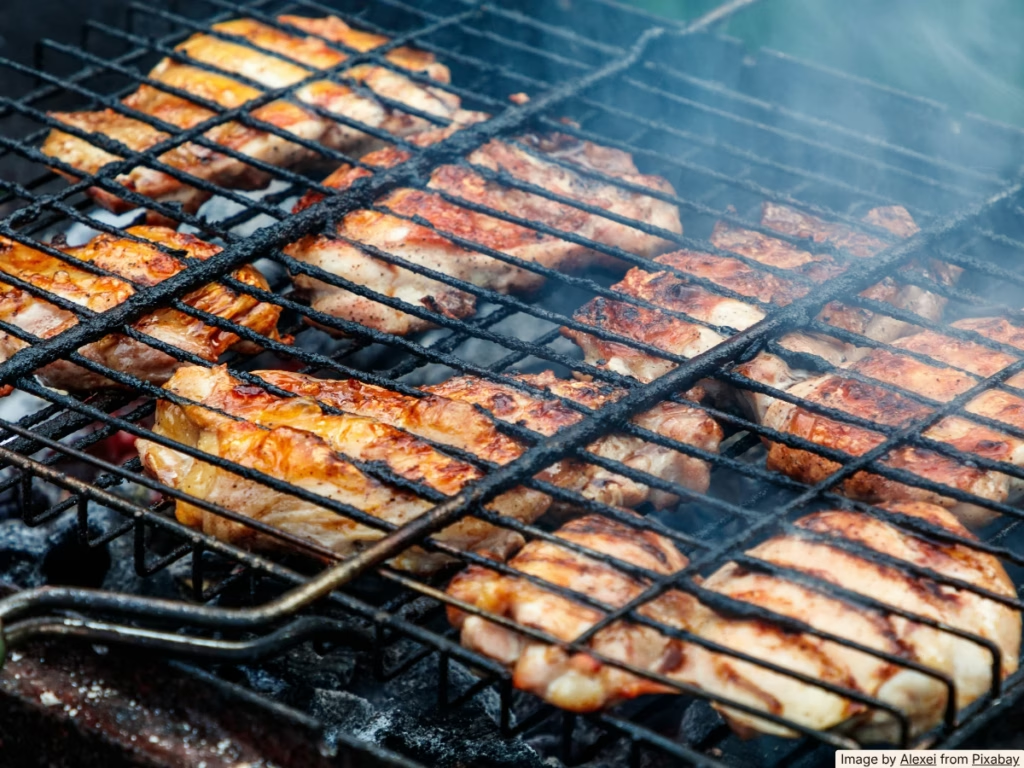
For context on how far the savings go: quick-service restaurants charge roughly triple the cost of homemade for a quarter-pound burger, meaning even a “cheap” fast food run for 10 people would cost $20+ more than cooking at home. The grill is the only viable path under $50. The chicken just makes that path easier.
The Bottle vs. Can Math Nobody Talks About
Here’s a small swap that most budget BBQ guides skip entirely, probably because it feels too obvious to mention. It is not too obvious. It is $6-$8 in your pocket.
Twenty individual 12-oz soda cans for 10 people runs about $12, depending on brand and store. Two 2-liter bottles of the same soda runs about $4-$6. That’s a $6-$8 savings on drinks alone, which is the difference between a $50 party and a $56 party. At a $50 budget, $6 is over 10% of the budget.
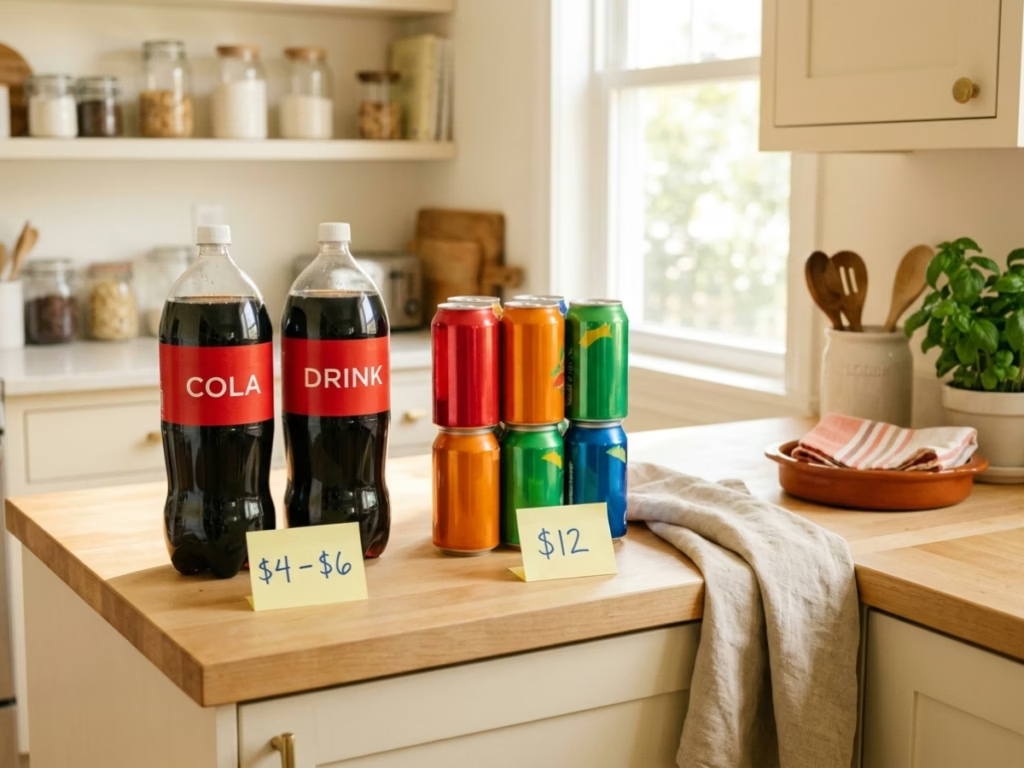
Add a jug of iced tea made from concentrate or a pitcher of lemonade from a frozen can, and you have more than enough for 10 adults and whatever kids show up. The people who wanted a specific soda brand in a specific can will survive. They will drink the 2-liter. They will be fine.
Sides That Pull Weight Without Pulling Budget
Potato salad and watermelon are doing a lot of work in this menu, and not by accident. Both potato salad and chicken breast saw price declines in 2024, making them the two most budget-friendly stars of a July cookout right now.
A 5-lb bag of potatoes runs $3-$5. Add mayo, mustard, a few eggs, and some celery and you’re at $8-$10 total for a potato salad that feeds 10 generously. This is the side dish that makes people go back for seconds, ask for the recipe, and not notice that there’s no pasta salad. It also holds well in the fridge, which means you can make it the night before and cross one thing off your July 4th morning list.
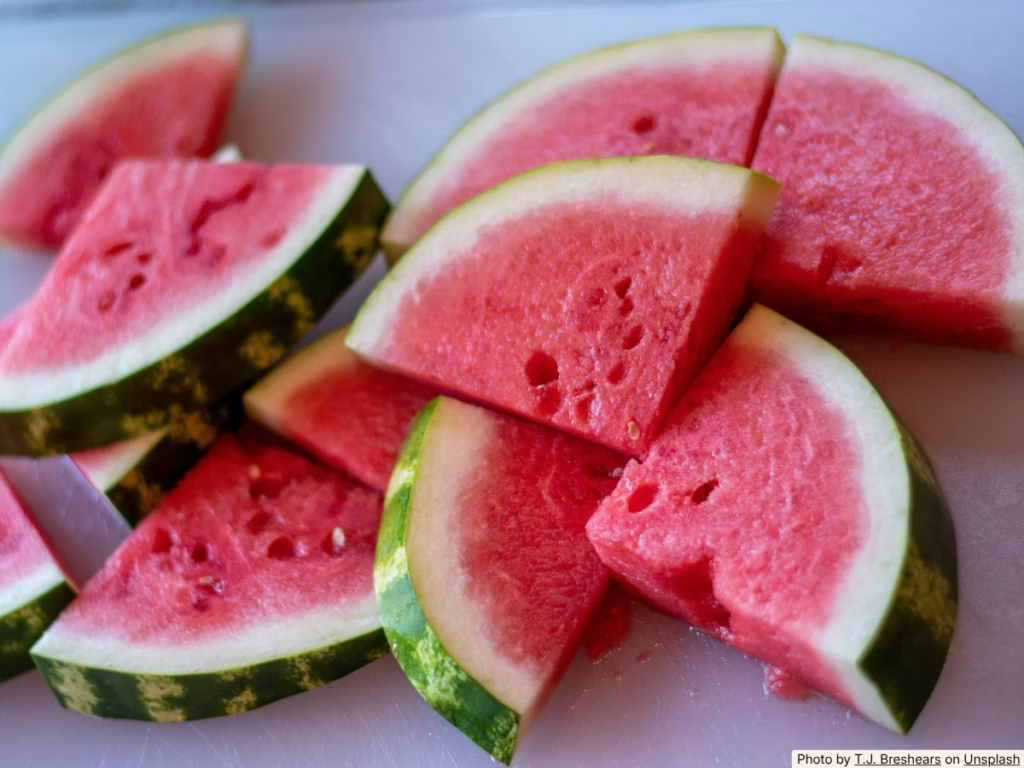
Watermelon is the other hero. A whole melon in the $5-$8 range feeds 10 people with enough left over to send someone home with a slice wrapped in foil (they will appreciate this). It requires zero cooking, it’s self-serve, and it doubles as a decoration if you put it on a cutting board and leave it whole until it’s time to slice. BOOM. You’ve styled your table.
Kettle chips or corn chips fill the gap between the main and the sides without adding complexity. One large bag at $3-$4 is enough. You don’t need three different chip varieties. Nobody ever needs three different chip varieties.
Enjoying this?
Eat more of what you buy.
One short email a week. Preservation tricks, ingredient deep-dives, and the small kitchen habits that can quietly save $700+ a year on food waste. Pinky promise: no spam.
How to Shop for This Without Buying Things You Already Have
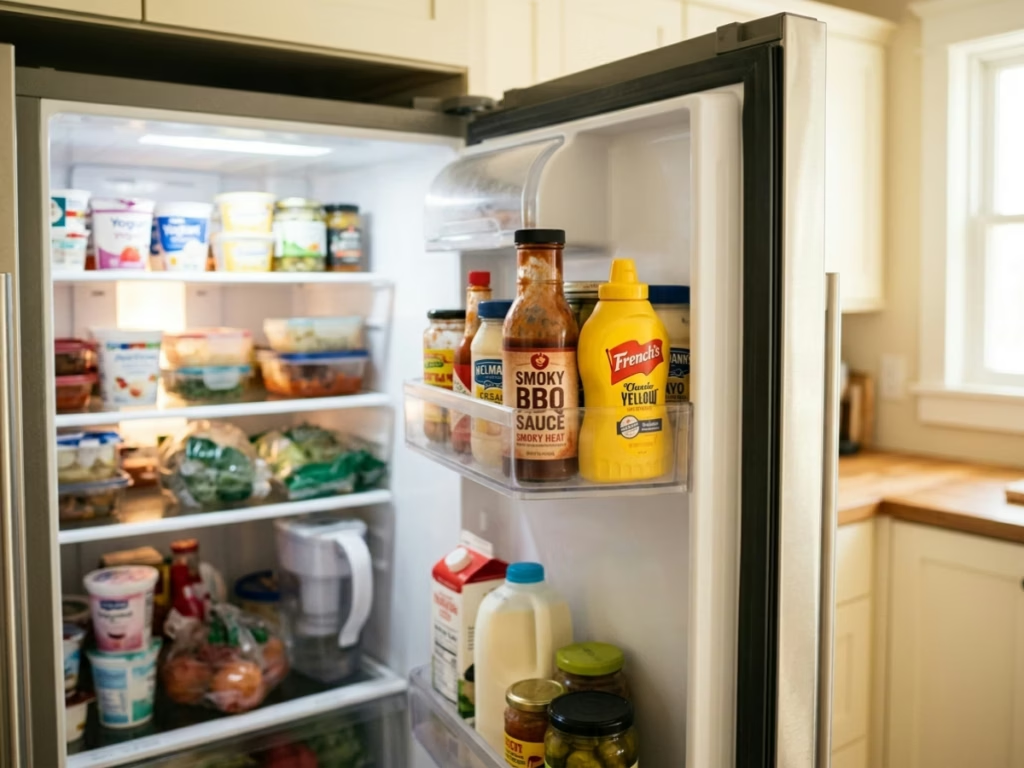
Before you write a single item on your grocery list, spend five minutes looking at what’s already in your kitchen. Most households heading into a holiday weekend already have some of this: a half-used bottle of BBQ sauce, mustard, mayo, cooking oil, maybe a bag of chips from last week that’s still sealed. That’s $5-$10 of groceries you don’t need to buy.
This is exactly the kind of audit that Pantidy is built for. It’s a pantry-tracking app on iOS and Android that shows you what you already own, what’s expiring, and what you actually need to buy before a specific meal. You open the app, you see your pantry state, and you write a shopping list based on reality instead of memory. If you’ve got BBQ sauce and mustard already in the house, Pantidy shows you that before you put them in your cart. Free to try for 14 days, then $5/month.
If you’re doing this manually (totally valid), the rule is: check before you shop, not after. The number of people who buy a bottle of mustard for a July 4th cookout and then find two bottles of mustard already in the fridge when they get home is higher than 1 (me).
Regional Prices and Where to Shop
If you’re in the Northeast, you’re starting from a better position than most. The average cookout for 10 costs $63.54 in the Northeast, compared to $80.88 in the West, a $17 difference for the exact same menu. That gap is real and it matters when you’re working with a $50 target.
Regardless of region, the store you shop at will move your total more than almost any other decision. Warehouse stores (Costco, Sam’s Club) are excellent for chicken in bulk and for chips, but they’re not always worth it if you’re only feeding 10. Discount grocers will get you closer to the low end of every price range above. A standard mid-range grocery store will land you in the middle.
One rule worth following: don’t shop at the grocery store closest to the fireworks display. Prices near high-traffic July 4th areas are not your friend on July 3rd.
For more on making a crowd-sized meal work on a tight budget, the Father’s Day steak dinner for $40 playbook runs the same math on a different menu. And if you want to see how this scales down to snacks, the World Cup snacks under $25 guide has the same structure.
The Day-Of Timeline (So You’re Not Sweating at 3pm)
The night before: make the potato salad. Full stop. It tastes better after sitting overnight anyway, and it means your July 4th morning has one fewer thing on it.
Morning of: thaw your chicken if it was frozen. Take it out of the freezer the night before, actually, and let it thaw in the fridge overnight. If you forgot (it happens, we’re not judging), a cold water bath works in a pinch.
Two hours before guests arrive: slice the watermelon, set out the chips, fill a cooler with ice and drinks. The 2-liter bottles go in the cooler. The iced tea goes in the fridge.
One hour before: start the grill. Chicken thighs need about 6-8 minutes per side over medium-high heat, or 20-25 minutes in a 400°F oven if the grill isn’t cooperating. Shred it, add BBQ sauce, keep it warm.
By the time people show up, the food is done and you are a person who has it together. (Results may vary on the “having it together” part, but the food will be ready.)
Frequently Asked Questions
How much does a July 4th BBQ for 10 people cost on average in 2026?
According to the American Farm Bureau Federation’s 2026 Summer Cookout Cost Survey, the average Independence Day cookout for 10 people costs $73.82, up 4% from 2025. Regional prices range from $63.54 in the Northeast to $80.88 in the West.
What’s the single most effective way to cut July 4th BBQ costs?
Swapping ground beef for chicken breast is the highest-impact substitution. Chicken breast prices declined in 2024 while ground beef has risen roughly 30% since 2019, meaning the swap can save $9 or more on meat alone for a 10-person party.
Is it really possible to host a July 4th BBQ for 10 people under $50?
Yes. Budget Bytes documented a similar cookout feeding 8 people for around $40 using BBQ chicken sandwiches, potato salad, and watermelon. Scaling to 10 with the same menu structure lands in the $44-$48 range at mid-range grocery prices.
Does buying 2-liter soda bottles instead of cans actually save money?
It does. Switching from 20 individual 12-oz cans (about $12) to two 2-liter bottles (about $4-$6) saves $6-$8 per party. On a sub-$50 budget, that’s not a rounding error.
Can Pantidy help me plan a budget cookout?
Pantidy is a pantry-tracking app on iOS and Android that shows what food you already own and what’s expiring, so you don’t buy duplicates before a big meal. It also helps you build a shopping list based on what you actually need. There’s a 14-day free trial; after that it’s $5/month.
One Thing to Do Right Now
Open your fridge and your pantry and spend three minutes writing down what you already have that’s on the menu above. BBQ sauce? Mustard? Mayo? Chips? Every item you find is an item you don’t buy. Then write your actual shopping list from what’s missing.
That three-minute audit is the difference between a $44 cookout and a $58 one. The party is the same either way. The receipt doesn’t have to be.
If you want more low-cost Independence Day party ideas beyond the menu, the internal links above cover snacks and steak dinners at the same budget level.
Food Waste Calculator
How much food are you throwing away?
The average household wastes about 30% of the food they buy. See what that costs you.
You’re throwing away about
$0
per year in wasted food
Pantry + Recipes
From "What's in the Fridge?" to Dinner in Minutes
Pantidy is a smart pantry app on iOS and Android that tracks what you have, flags what's expiring, and matches your inventory to recipes you've already saved.
- See every recipe you can make right now
- Filter for recipes that use expiring items first
- Check ingredient match percentages at a glance
- Add missing items to your shopping list in one tap