
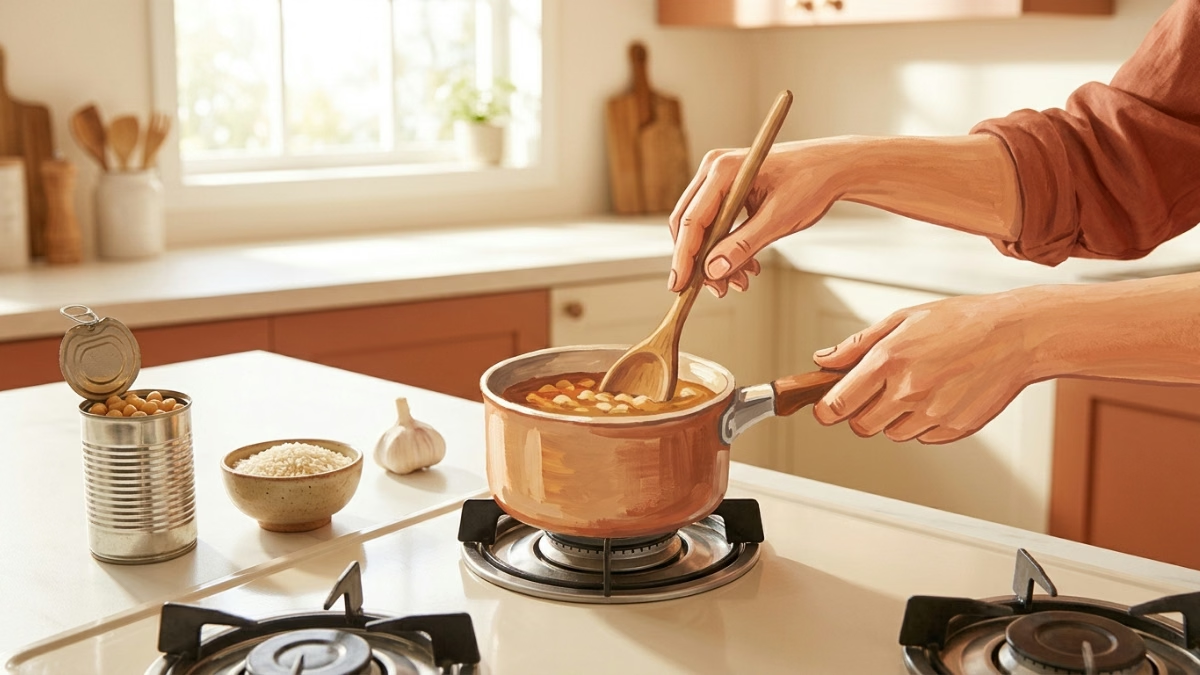
Pantry cooking for one doesn’t mean eating sad half-portions of something designed to feed a family of four. It means picking recipes that divide cleanly, knowing the exact math conversions, and, here’s the part nobody talks about, deciding what happens to the other half of that can of beans before you open it. That last part is where most of the food waste lives.
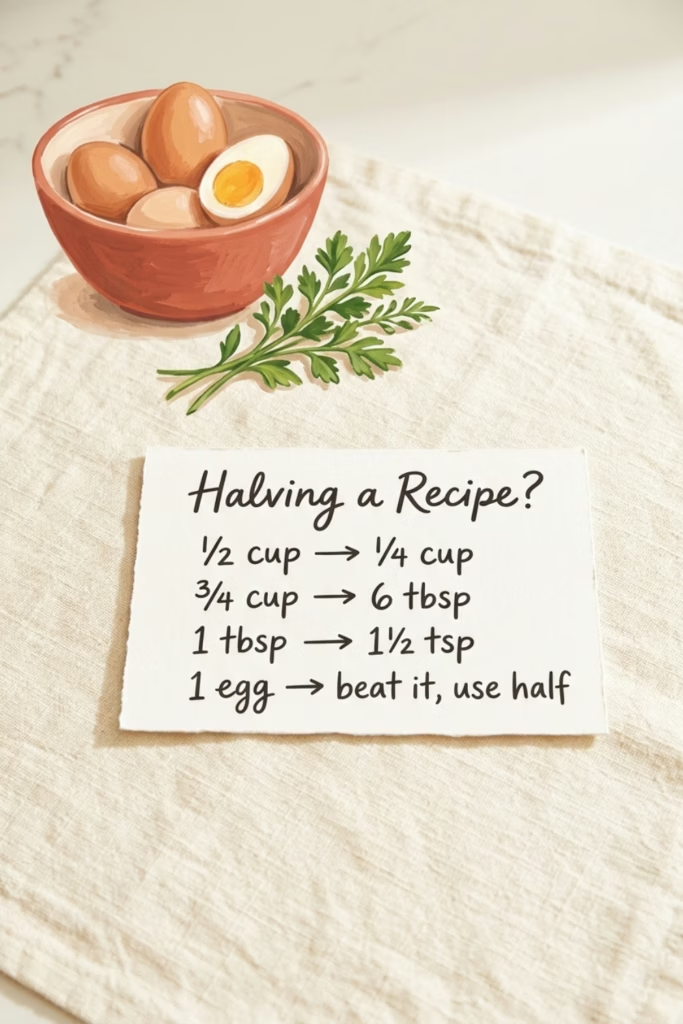
North Dakota State University’s cooking-for-one guide recommends choosing recipes that are easy to divide mathematically, then adjusting seasonings gradually. Their halving table makes the math concrete: 1/2 cup becomes 1/4 cup, 3/4 cup becomes 6 tablespoons, and 1 teaspoon becomes 1/2 teaspoon. Bookmark that. You’ll use it more than you think.
Key Takeaways:
- North Dakota State University recommends choosing recipes that are easy to divide mathematically and checking doneness 5 to 10 minutes earlier than the full-recipe time.
- NDSU’s halving table gives exact conversions: 1/2 cup becomes 1/4 cup, 3/4 cup becomes 6 tablespoons, and 1 teaspoon becomes 1/2 teaspoon.
- Planning what to do with the second half of a can or protein before cooking starts, not after, is the move that prevents the extra half from quietly dying in the back of your fridge.
- Half-recipe pantry cooking works for anyone with a stocked freezer or tight grocery budget, not just people who live alone.
The Conversions That Always Trip People Up
Most recipe scaling is straightforward until you hit 3/4 of something. Nobody is walking around with a mental image of “six tablespoons.” So here’s the short list you actually need:
- 3/4 cup → 6 tablespoons (or just fill a 1/4 cup twice, plus two tablespoons, yes, it’s annoying)
- 2/3 cup → 1/3 cup
- 1 tablespoon → 1.5 teaspoons
- 1 egg → crack it, beat it, use half (we’ve all just guessed and eaten a slightly eggy result anyway)
One more thing NDSU flags: halved recipes may be done 5 to 10 minutes earlier than the original time. Less mass in the pan means faster cooking. Check it early, every time.
The Real Hack: Plan the Second Half First
Open a can of chickpeas for tonight’s dinner. Use half. Put the rest in the fridge with no plan. Check back in four days. It is now a small, damp mystery at the back of the shelf and it is going in the trash.
That’s not a cooking problem. That’s a planning problem.
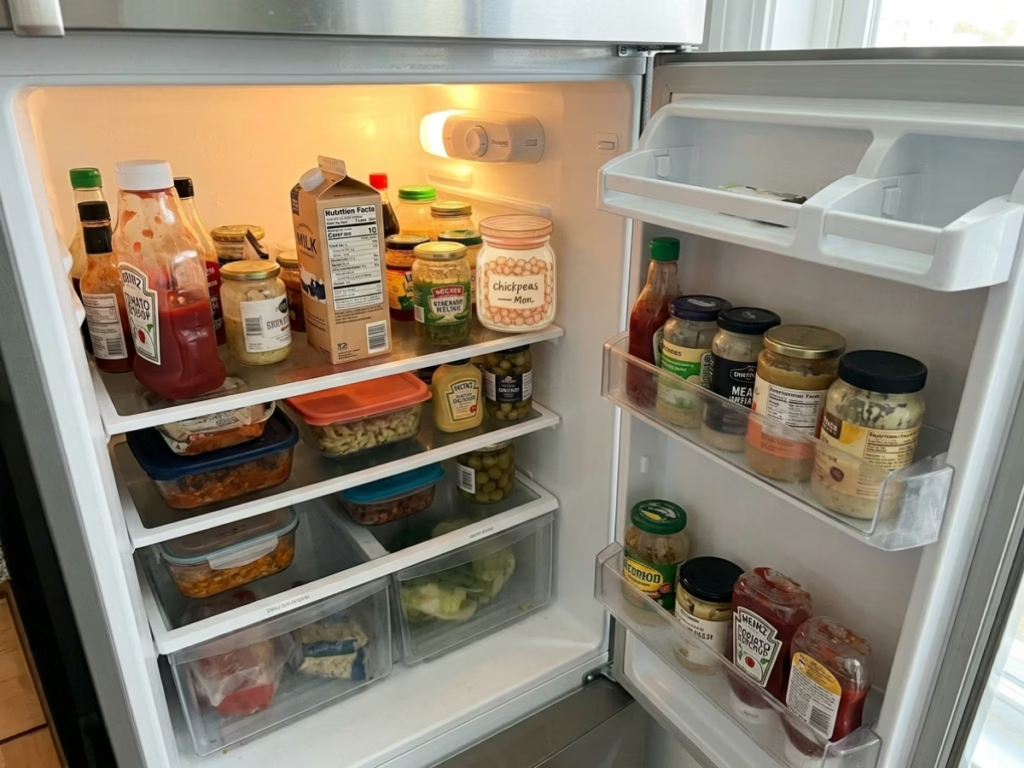
Before you start cooking, decide where the other half goes. The rest of those chickpeas? Into a quick pantry pinwheel lunch tomorrow. The leftover half-pound of ground beef? Freeze it now, label it, and it becomes a skillet hash on Thursday. NDSU specifically recommends refrigerating or freezing the remainder of any partially used can and labeling it with contents and date, which sounds obvious until you’re staring at an unlabeled container of something beige three days later.
Pantidy tracks your open inventory with expiration dates so you can see what’s actually in there before you start cooking. It runs on iOS and Android with a 14-day free trial, which is long enough to stop losing half-cans to the forgotten lands behind the ketchup.
Enjoying this?
Eat more of what you buy.
One short email a week. Preservation tricks, ingredient deep-dives, and the small kitchen habits that can quietly save $700+ a year on food waste. Pinky promise: no spam.
Pantry Staples That Make Cooking for One Easier
Some ingredients are built for this. Rice, canned tuna, eggs, garlic, onions, these scale down cleanly, keep well, and show up in roughly 80% of weeknight meals. Start here when you’re choosing what to halve. (Baked goods are the exception. Halving a cake is a chemistry experiment. We’ve been there. It did not spark joy or inspire confidence.)
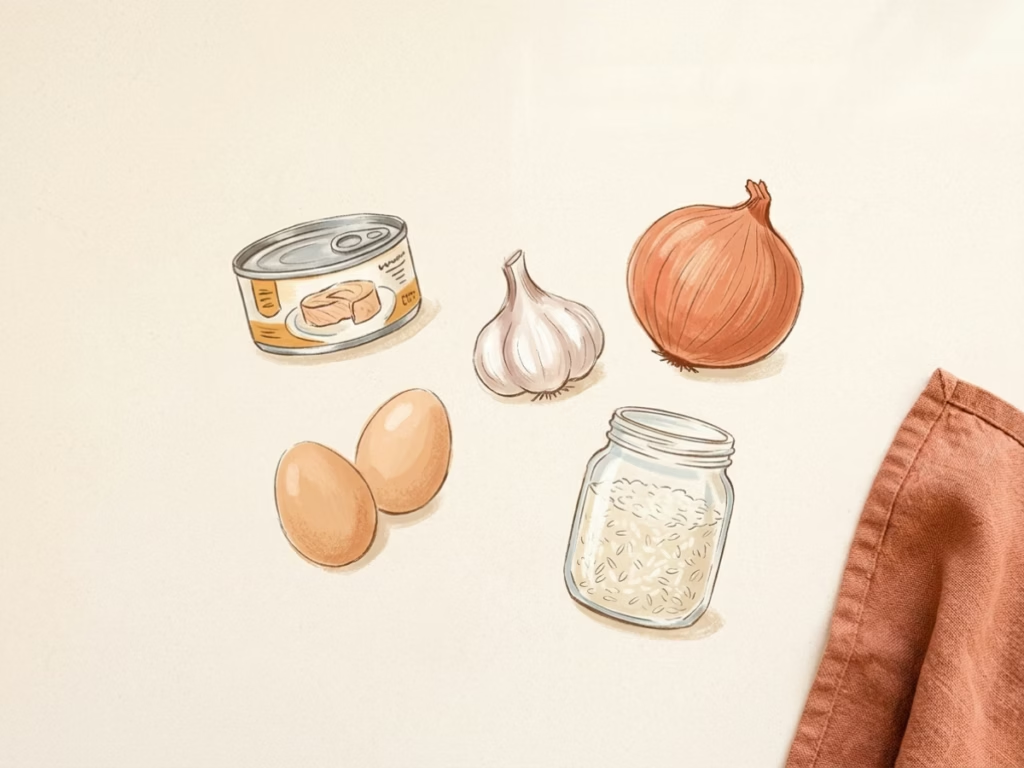
These are also the staples worth stocking up on if you do any amount of meal prep for one, since they cover multiple recipes without buying fresh every time.
If you’re stuck on what to actually make, the AI Chef feature in Pantidy generates recipes from whatever you already have, useful when you’ve got two onions, half a can of coconut milk, and a strong desire to not go to the store.
Frequently Asked Questions
What recipes work best for half-recipe cooking for one?
Recipes with simple, clean measurements divide most easily, soups, stir-fries, pasta dishes, and grain bowls are natural fits. NDSU recommends choosing recipes that divide mathematically before you start, rather than eyeballing a complex bake in half. Avoid anything with structural chemistry (bread, most cakes) until you’re comfortable with the math.
Do I need to change the cook time when I halve a recipe?
Yes. Less food in the pan cooks faster. Check for doneness 5 to 10 minutes earlier than the original recipe’s time, per NDSU’s cooking-for-one guide. Use your senses, color, texture, internal temperature, not just the clock.
What do I do with the other half of a can I opened?
Transfer it to an airtight container, label it with what it is and today’s date, and refrigerate or freeze it immediately. Most opened canned goods keep in the fridge for 3 to 4 days. If you don’t have a plan for it in that window, freeze it now, not later.
Is half-recipe cooking only useful for people who live alone?
Not at all. It works for anyone who already has a stocked freezer or wants to stretch a grocery budget further. Gleaners Nutrition Hub’s cooking-for-one handout frames it as a fallback strategy for when the freezer is already full of leftovers, which applies to plenty of households regardless of size.
Do this today: pick one recipe you were already planning to make this week, halve it using the conversions above, and write down, before you open anything, exactly where the second half of each ingredient is going. Fridge plan or freezer plan, written down, before the can opener comes out. That’s the whole system.
Food Waste Calculator
How much food are you throwing away?
The average household wastes about 30% of the food they buy. See what that costs you.
You’re throwing away about
$0
per year in wasted food
Pantry + Recipes
From "What's in the Fridge?" to Dinner in Minutes
Pantidy is a smart pantry app on iOS and Android that tracks what you have, flags what's expiring, and matches your inventory to recipes you've already saved.
- See every recipe you can make right now
- Filter for recipes that use expiring items first
- Check ingredient match percentages at a glance
- Add missing items to your shopping list in one tap