
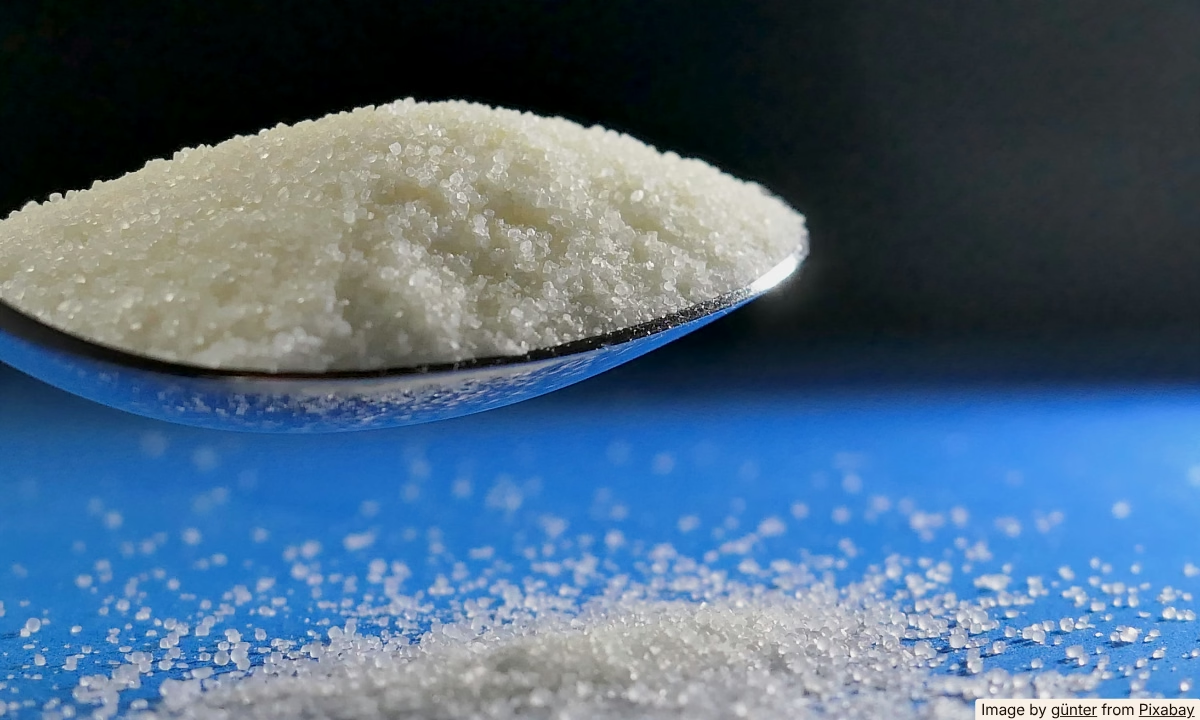
Kosher salt vs sea salt is one of those kitchen debates that sounds complicated and isn’t. Kosher salt and sea salt are both sodium chloride and deliver the same saltiness by weight. The real difference is crystal size: kosher salt’s larger, uniform crystals make it ideal for cooking and dry-brining, while sea salt’s flaky crystals are best as a finishing touch at the table.
In this post:
- Kosher salt and sea salt are both sodium chloride, by weight, they deliver the same saltiness, per Food Network.
- Crystal size is the practical difference: kosher salt’s larger crystals are easy to pinch and distribute evenly during cooking, while sea salt’s flaky crystals add texture as a finishing salt.
- Substituting by volume (teaspoons) instead of weight can over- or under-salt a dish because crystal size changes how much fits in a spoon.
- Sea salt typically costs more than kosher salt because harvesting is more labor-intensive, not because it tastes better in a pot of pasta water.
- Neither kosher salt nor sea salt is typically iodized, unlike standard table salt.
Kosher Salt vs Sea Salt: The Real Difference Is Crystal Size, Not Chemistry
Food Network puts it plainly: the main differences between kosher and sea salt are crystal size, texture, and use case, not sodium content. Kosher salt comes from underground deposits and is processed into large, uniform flakes that are easy to pinch and scatter evenly. Sea salt is evaporated from seawater and can be fine, chunky, flaky, or pyramid-shaped depending on the brand, which is exactly what makes measuring by spoon unreliable.

That last part matters. If a recipe calls for a teaspoon of kosher salt and you swap in fine sea salt, you’re packing more actual sodium into that spoon. You’ve just seasoned the dish harder than intended. Food Network recommends measuring by weight, not volume, when substituting one for the other. A kitchen scale fixes this problem in about four seconds.
Pantidy also tracks what’s in your pantry by weight and quantity, so you always know what you’re working with before you start cooking.
When to Use Each One
Kosher salt is your everyday cooking salt. Its larger crystals make it the right call for seasoning pasta water, dry-brining a steak, or seasoning a roast chicken, because you can feel how much you’re adding. SaltWorks recommends it for most cooking uses, with one exception: baking, where precise dissolution matters and weight measurements are already standard.
Diamond Crystal Kosher Salt is the benchmark most recipe developers write to, per Food Network. If your box says Morton, it’s denser. Same sodium by weight, different volume per spoon. (This is responsible for more ruined Thanksgiving turkeys (we think).)
Sea salt is your finishing salt. Those flaky Maldon pyramids you’ve seen on every food blog since 2015? They’re doing a textural job, not a seasoning job. A pinch of flaky sea salt on top of roasted vegetables or a chocolate chip cookie right before serving adds crunch and a little visual drama. Using $12 Maldon to salt your pasta water is like using a good bourbon in a mixer. You can do it. But why.

The “Premium Salt” Upsell Is Mostly Marketing
Sea salt costs more than kosher salt because harvesting seawater is more labor-intensive than mining, per Food Network and SaltWorks. That price difference does not translate into a better bowl of soup. For weeknight cooking, a $3 box of kosher salt outperforms a $9 bag of artisan sea salt in every practical way. Save the fancy stuff for the table.
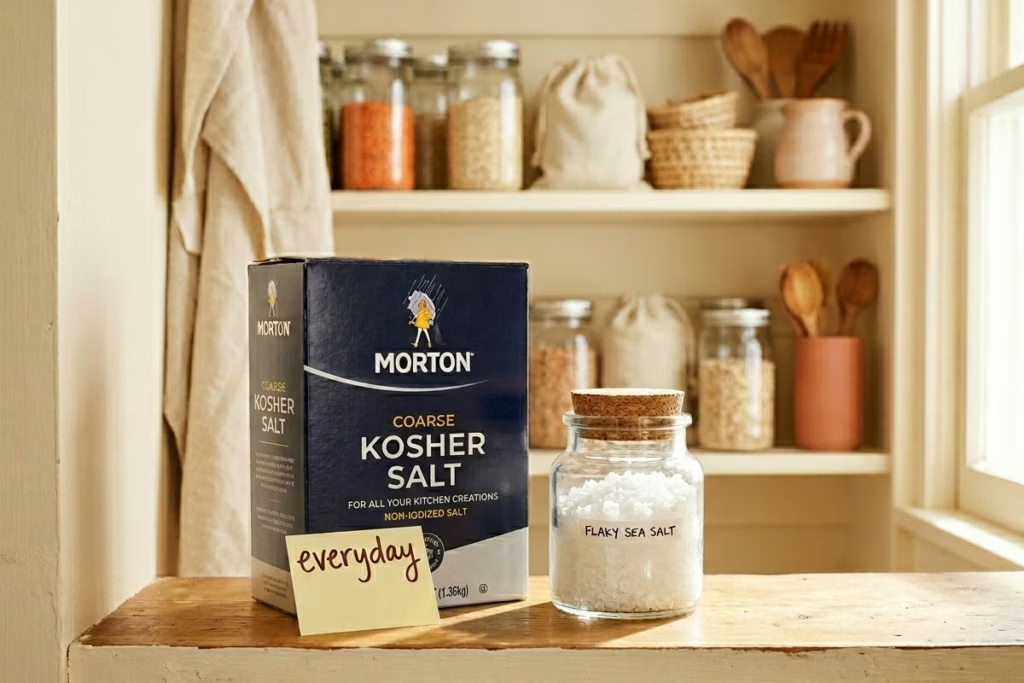
Neither is iodized, by the way. If you’ve quietly replaced all your table salt with kosher or sea salt and you’re not eating much seafood or dairy, it’s worth a quick check on your iodine intake, per Little Potatoes.
Enjoying this?
Eat more of what you buy.
One short email a week. Preservation tricks, ingredient deep-dives, and the small kitchen habits that can quietly save $700+ a year on food waste. Pinky promise: no spam.
If you’re stocking a kitchen from scratch, Pantidy tracks what you have in your pantry and fridge so you don’t accidentally buy a third box of kosher salt because you forgot the other two were in the back of the cabinet, like us. It’s on iOS and Android, free to try for 14 days, then $5 a month.
And if you need something to cook with that salt this weekend, the World Cup snack spread under $25 is a good place to start.
Frequently Asked Questions
Can you substitute sea salt for kosher salt?
Yes, but measure by weight, not volume. Food Network notes that crystal size changes how much salt fits into a spoon, so a 1:1 teaspoon swap can over-season a dish if the sea salt is finer than the kosher salt it’s replacing.
Is kosher salt better than sea salt for dry-brining?
Kosher salt is the standard choice for dry-brining meat because its larger, uniform crystals are easy to pinch and distribute evenly across a surface, per SaltWorks. Fine sea salt can work, but you’ll need to use less of it by volume.
Does sea salt taste different from kosher salt?
If you’re wondering whether sea salt tastes different from kosher salt, the short answer is: not really, by weight.
By weight, they deliver the same saltiness because both are primarily sodium chloride, per Food Network. Flaky sea salt used as a finishing salt can taste “brighter” because the crystals dissolve on your tongue all at once, but that’s a texture effect, not a chemistry one.
Is kosher salt iodized?
No. Little Potatoes and SaltWorks both note that kosher salt and sea salt are typically not iodized, unlike standard table salt. If you’ve swapped out table salt entirely, check other iodine sources in your diet.
Why does sea salt cost more than kosher salt?
Harvesting sea salt by evaporating seawater is more time-consuming than mining underground salt deposits, which is why sea salt commands a higher price, per Food Network. The price difference reflects production, not a meaningful difference in how well it seasons your pasta water.
One thing to do today: check your pantry for duplicate salt boxes before your next grocery run. Pantidy does this automatically, but a quick look right now works too. If you’ve got kosher salt already, skip the sea salt unless you specifically want a finishing salt for the table. That’s $4 to $9 back in your pocket, and one fewer thing rattling around in the cabinet.
Food Waste Calculator
How much food are you throwing away?
The average household wastes about 30% of the food they buy. See what that costs you.
You’re throwing away about
$0
per year in wasted food
Pantry + Recipes
From "What's in the Fridge?" to Dinner in Minutes
Pantidy is a smart pantry app on iOS and Android that tracks what you have, flags what's expiring, and matches your inventory to recipes you've already saved.
- See every recipe you can make right now
- Filter for recipes that use expiring items first
- Check ingredient match percentages at a glance
- Add missing items to your shopping list in one tap