
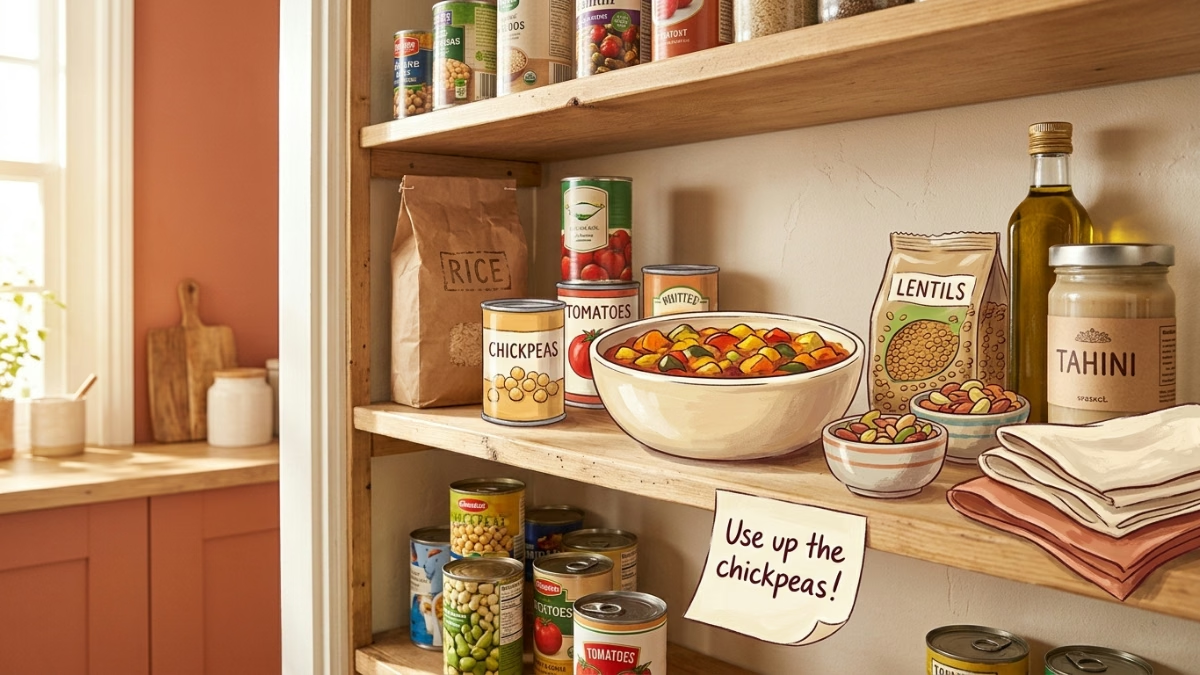
Your pantry is holding cash. The question is whether it’s working for you or quietly expiring behind the pasta boxes.
A 5-minute pantry inventory audit gives you your pantry’s dollar value, flags what’s about to go bad, and shows where duplicate buying is bleeding your grocery budget. With food-at-home prices up 2.7% over the year ended June 2026, per BLS, every can of chickpeas and half-used bag of rice is worth more than it was last year. It’s worth tracking.
Key Takeaways:
- Food-at-home prices rose 2.7% over the year ended June 2026, per BLS data, making pantry stock worth more to track than in recent years.
- A pantry audit exposes duplicate purchases, one of the most invisible ways households lose grocery money each week.
- The most valuable shelf is often the boring one: staples and condiments can hide more reusable dollars than fresh meal-prep items.
- Pantidy is a smart pantry app on iOS and Android that tracks expiration dates and shows what you can cook from what you already own.
- A 14-day free trial gives you enough time to run a full pantry audit and see what you’ve been silently losing.
Step 1: Pull Everything Forward (2 Minutes)
Start at the back. The forgotten lands behind the soy sauce and the mystery grain you bought in 2024 are where the money hides.
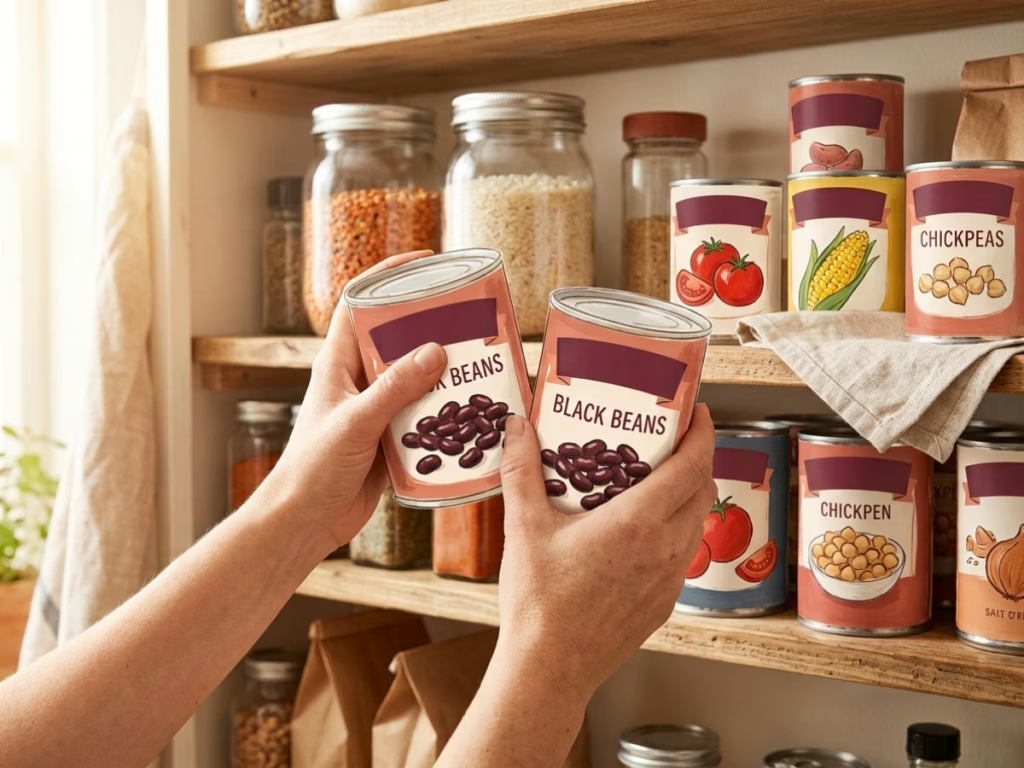
Pull items to the front of each shelf, group by category (grains, canned goods, condiments, snacks), and take a quick mental note of anything that appears more than once. Three cans of black beans. Two jars of tahini. A backup olive oil you bought because you were sure you were out. Sound familiar? That’s duplicate buying, and it’s one of the fastest ways grocery inflation quietly doubles its damage on your budget.
You’re not organizing here. You’re reading the room.
Step 2: Flag the Dying Food (2 Minutes)
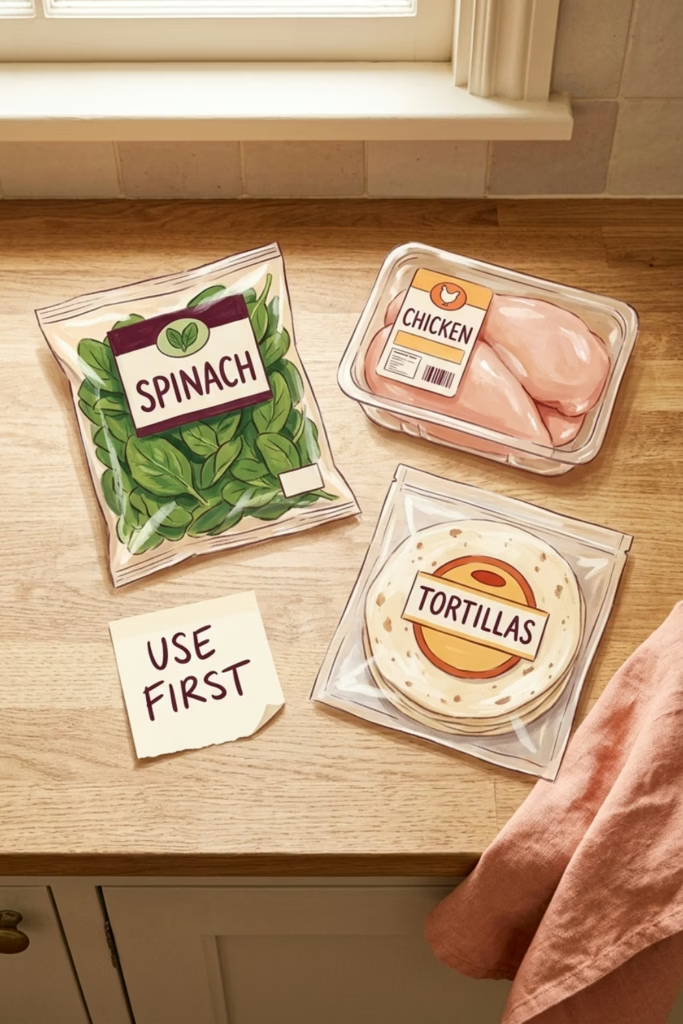
Check dates on anything perishable or semi-perishable. Spinach that’s three days out, chicken breast that thawed Tuesday, tortillas that are two weeks past their date. Each of those is a dollar amount attached to a countdown clock.
Write them down. This is your “use first” list, and it shapes your meals for the next 48 hours more reliably than any meal plan you’d build from scratch.
The USDA ERS projects food-at-home prices will rise 2.5% for the full year 2026, per USDA ERS. That ground beef you’re about to throw out costs more to replace than it did last fall. The audit makes that real.
Pantidy tracks all of this automatically on iOS and Android, it color-codes what’s expiring soon and tells you which of your saved recipes you can make right now. Try Pantidy free for 14 days and run this audit without the mental math.
Step 3: Estimate Your Pantry Inventory Value (1 Minute)
Add up a rough dollar figure for what you pulled out. Don’t need exact receipts. Round numbers are fine.
Enjoying this?
Eat more of what you buy.
One short email a week. Preservation tricks, ingredient deep-dives, and the small kitchen habits that can quietly save $700+ a year on food waste. Pinky promise: no spam.
Your pantry inventory value is probably higher than you think (it almost always is). Most households are sitting on a few hundred dollars of usable food at any given time.
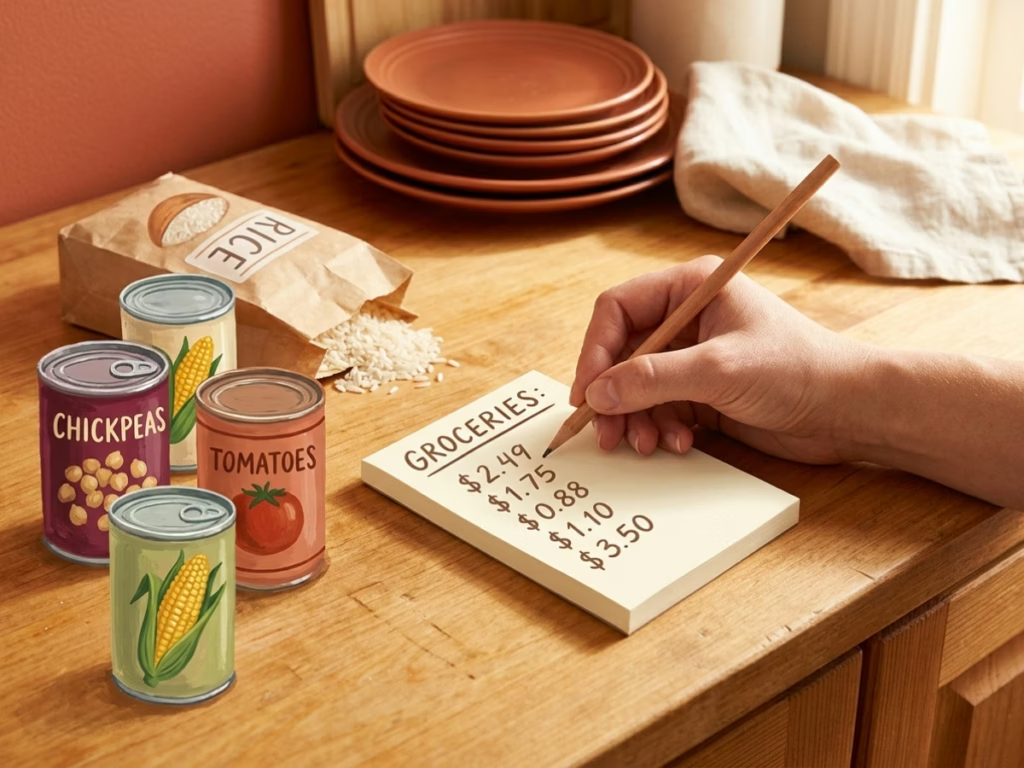
The goal isn’t a perfect spreadsheet. It’s a number that makes the waste feel real when you’re tempted to skip cooking and order delivery instead.
Frequently Asked Questions
How do I calculate my pantry inventory value?
Group your pantry and fridge items by category, estimate each item’s replacement cost, and add it up. You don’t need receipts, rounded grocery prices work fine. Most households find the total higher than expected, which is the point.
Why does a pantry audit save money during inflation?
When food-at-home prices rise (they were up 2.7% year-over-year as of June 2026, per BLS), every item you already own is worth more to use than to replace. An audit stops you from buying duplicates and shows you what to cook before it expires.
What should I look for in a pantry inventory audit?
Duplicate items, expiring perishables, and orphaned ingredients, things you bought for one recipe and never touched again (we’ve all got a few cans of canned tuna in there somewhere). These are where the hidden losses live.
Can an app help me track my pantry inventory value?
Yes. Pantidy is a smart pantry app that tracks what you own, flags what’s expiring, and matches your inventory to recipes you’ve saved. It’s available on iOS and Android with a 14-day free trial.
How often should I do a pantry audit?
A quick scan once a week before you shop is enough. The full pull-everything-forward version is worth doing once a month, or any time your grocery bill feels mysteriously high.
How much is my pantry worth right now?
Most households are sitting on $150 to $400 in usable pantry food at any given time, though it varies by household size. The fastest way to get a real number: pull everything forward, group by category (grains, canned goods, condiments, snacks), and use rounded grocery store prices to estimate. No receipts needed. A kitchen inventory tracker like Pantidy can log this as you go and keep the number current between audits.
Today’s action: Before your next grocery run, open the fridge and find one thing with fewer than three days left. Build dinner around it tonight. That’s the audit, in one move, and it’s also dinner handled.
Food Waste Calculator
How much food are you throwing away?
The average household wastes about 30% of the food they buy. See what that costs you.
You’re throwing away about
$0
per year in wasted food
Pantry + Recipes
From "What's in the Fridge?" to Dinner in Minutes
Pantidy is a smart pantry app on iOS and Android that tracks what you have, flags what's expiring, and matches your inventory to recipes you've already saved.
- See every recipe you can make right now
- Filter for recipes that use expiring items first
- Check ingredient match percentages at a glance
- Add missing items to your shopping list in one tap