
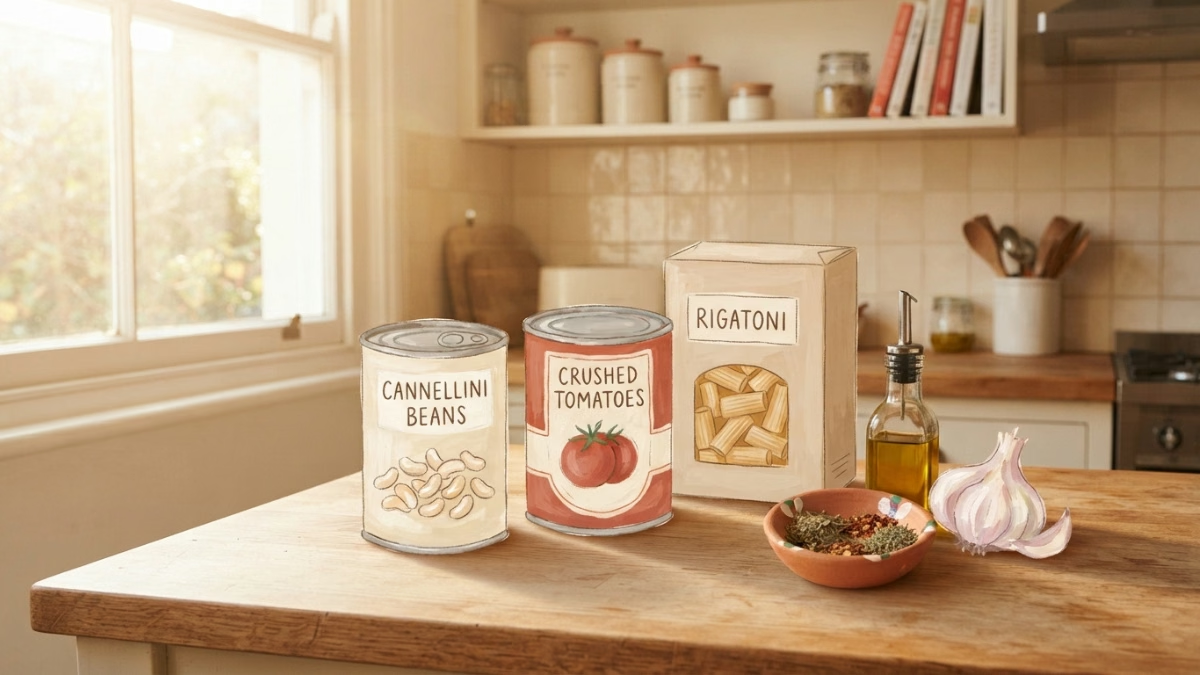
Ten meals you can make from pantry staples are sitting on your shelves right now. No grocery run. You just need to know what’s already there.
The average American spent over $760 on food that went uneaten in 2024, per ReFED. That’s not $760 of bad luck, that’s groceries bought without a plan, pushed to the back of the shelf, and quietly composted. The fix isn’t a meal-prep marathon or a budgeting app. It’s knowing which ten dinners your existing pantry already covers, and making one of them tonight instead of ordering delivery again.
These aren’t “bare pantry survival” meals. They’re flexible templates built around the staples most households already stock: canned beans, dried pasta, rice, olive oil, canned tuna, onions, and a few dried spices. Each one survives a missing ingredient and still produces a full dinner.
Key Takeaways:
- The average American spent over $760 on uneaten food in 2024, according to ReFED, pantry-first dinners directly recover that money.
- U.S. total surplus food in 2024 reached 70 million tons, about 29% of the entire food supply, per ReFED; using shelf-stable staples before shopping is one of the highest-leverage household fixes.
- Pantry dinners work best as flexible templates, not rigid recipes, one or two missing ingredients should not stop dinner from happening.
- Canned legumes, dried pasta, rice, olive oil, and canned tuna are the five shelf-stable categories that cover the widest range of weeknight meals.
- Planning two or three meals around what’s already on your shelves before each grocery run is one of the simplest ways to cut weekly food spend without a strict budget.
The Five Pantry Categories That Cover Almost Everything
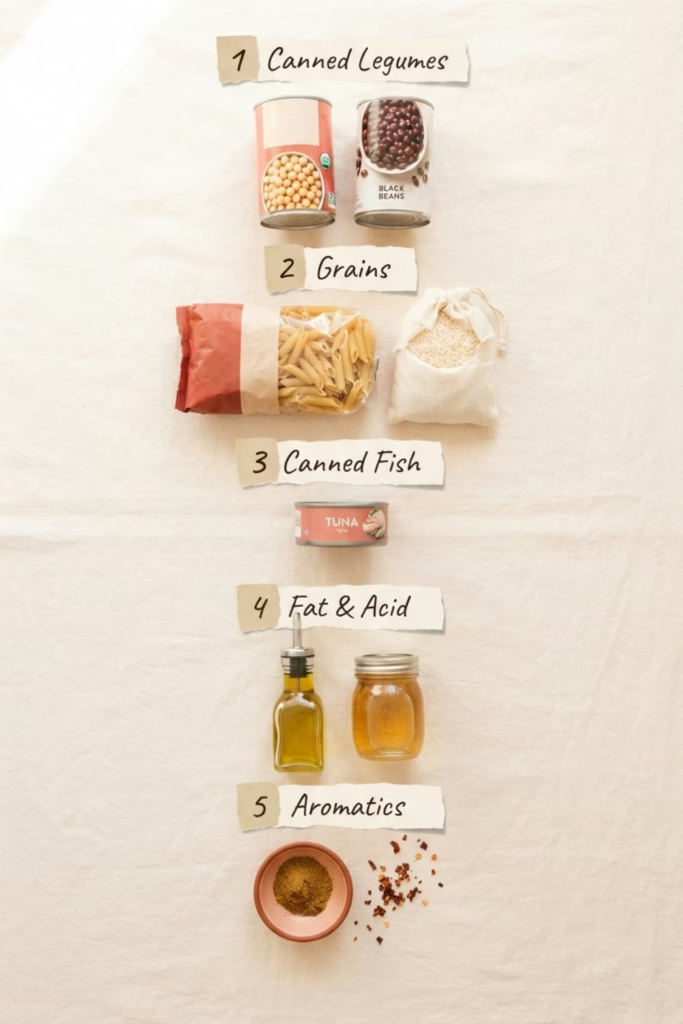
Before the recipes, a quick inventory check. If your shelves have at least three of these five categories, you can make most of what’s in this list:
- Canned legumes, chickpeas, black beans, white beans, lentils
- Dried or shelf-stable grains, pasta, rice, couscous, farro
- Canned fish or meat, tuna, salmon, sardines, canned chicken
- Fat and acid, olive oil, vinegar, canned tomatoes, soy sauce
- Aromatics, onion, garlic, dried spices, bouillon
That’s it. Almost every pantry dinner in existence is a combination of two or three of those five buckets.
Once you see the pattern, you stop staring blankly into the pantry at 5:45 p.m. and start cooking.
10 Meals You Can Make From Pantry Staples Tonight
1. Pasta e Fagioli (Pasta and Beans)
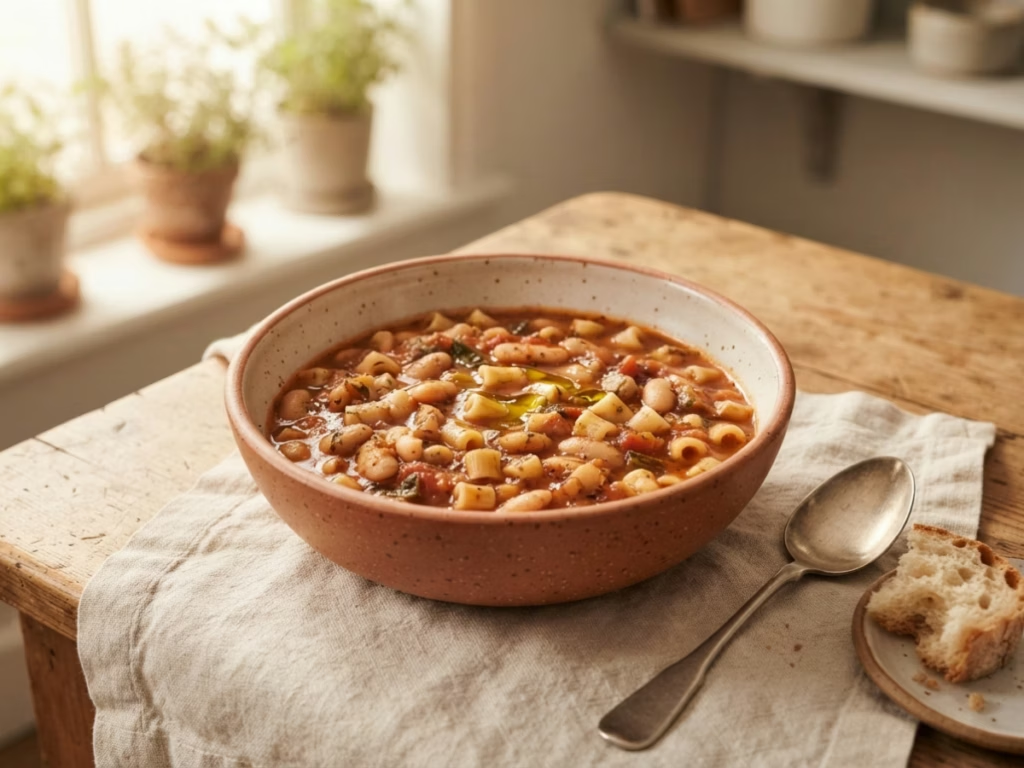
Olive oil, garlic, a can of white beans, a can of crushed tomatoes, dried pasta, salt. That’s the entire ingredient list for one of the most satisfying dinners in the Italian repertoire. Sauté the garlic in olive oil, add tomatoes, add beans, simmer ten minutes, cook the pasta in the same pot. Done in about twenty-five minutes, total.
The version most home cooks make is thicker than a soup and looser than a pasta dish. Somewhere in the middle, which is exactly where you want to be on a Tuesday. If you need a 15-minute pantry dinner on a night when nothing is going right, this is the one to reach for first.
2. Tuna and White Bean Salad (Served Warm or Cold)
Open a can of tuna and a can of white beans. Add olive oil, a splash of whatever vinegar you have, salt, pepper, and any dried herb that sounds good (oregano and rosemary both work). If you have a red onion, add it raw. If you have a lemon, squeeze it. That’s dinner.
This works as a cold salad or warmed briefly in a pan. It’s genuinely one of the easiest meals you can make, the canned tuna does half the work for you and it’s been patiently waiting in your pantry for months.
3. Black Bean Quesadillas
If you have tortillas, a can of black beans, and any cheese, cheddar, mozzarella, whatever’s in there, you have quesadillas. Mash the beans slightly with a fork so they don’t roll out. Add cumin and smoked paprika if you have them. Cook in a dry pan two minutes a side.
This is the weeknight dinner that parents have been quietly making since the beginning of time without any recipe. It’s about a dollar a serving, holds up to whatever vegetables need to get used up before they expire, and takes about twelve minutes. The kids will eat it, which on a Wednesday night is worth more than we can calculate.
4. Lentil Soup
Dried lentils, one onion, garlic, one can of crushed tomatoes, cumin, salt. Sauté the onion and garlic, add the lentils, cover with water or broth, add the tomatoes and spices, simmer thirty-five minutes. Red lentils cook even faster and go creamy without any blending.
This is also one of those dinners that’s actively better the next day (we listen, we don’t judge, make a big pot). Pair it with bread if you have it. Done.
5. Fried Rice
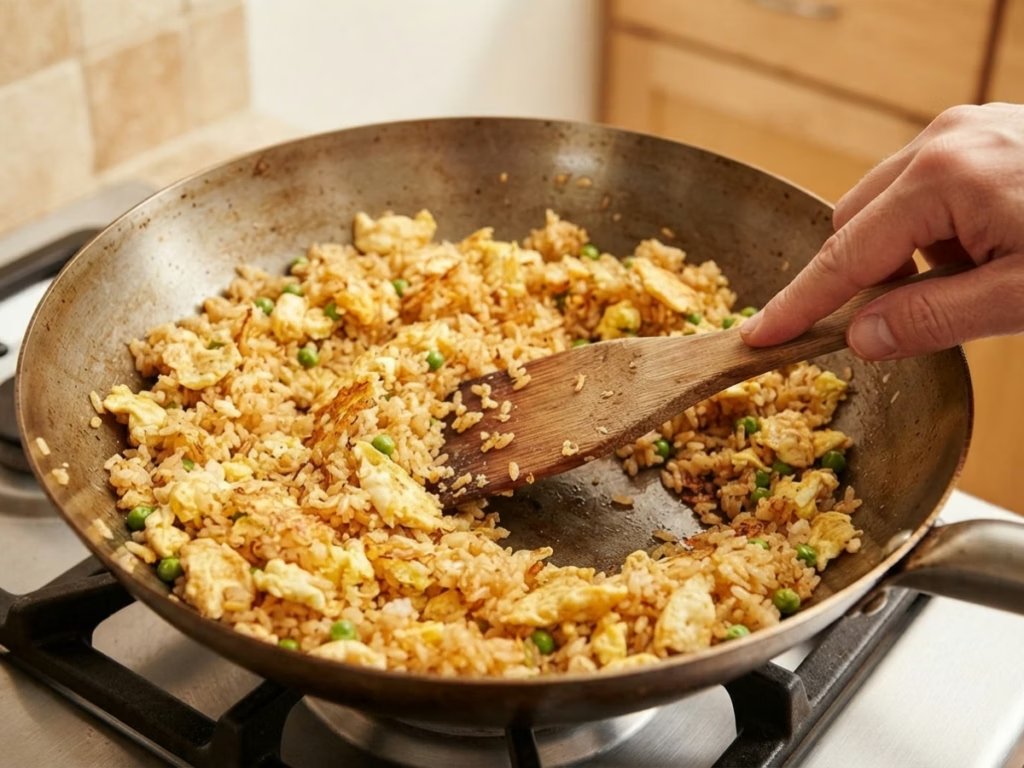
Leftover cooked rice is the main ingredient, which means this meal is built entirely on something you were otherwise going to ignore until it turned questionable in the back of the fridge. Heat oil in a pan, add garlic and onion, add the rice, let it sit and crisp for two minutes before you stir it, add soy sauce and whatever vegetables are in there, frozen peas, canned corn, wilting scallions. If you have eggs, push the rice to the side and scramble two of them in. BOOM. Weeknight fried rice, and the rice that was heading nowhere useful is now dinner.
The Next Five: Dinners That Use Exactly What’s Left
6. Pasta Aglio e Olio
Olive oil, garlic, dried pasta, salt, red pepper flakes if you have them, and parmesan if you have it. That’s a classic Roman dinner with four pantry staples, thirty dollars in a restaurant, and about fifteen minutes of your actual time. The key is toasting the garlic slowly in plenty of olive oil without burning it, low heat, patience, about three minutes, before you toss it with the pasta water you saved.
Save the pasta water. This is one of those instructions everyone skips and then wonders why the dish feels dry. Don’t skip it.
7. Chickpea Curry
A can of chickpeas, a can of coconut milk or a can of crushed tomatoes, garlic, onion, and whatever curry spices you have (curry powder, cumin, turmeric, garam masala, any combination works). Sauté the aromatics, add the spices to bloom them for thirty seconds, add the chickpeas and liquid, simmer fifteen minutes. Serve over rice.
This is one of those dinners that smells like you actually tried, which is a useful deception for a Thursday.
8. White Bean and Tomato Stew
Olive oil, garlic, a can of white beans, a can of crushed tomatoes, dried rosemary or thyme, salt. Same bones as pasta e fagioli but served without the pasta as a thicker stew. Add a splash of red wine if there’s an open bottle that needs using. Serve with bread for dipping, or just eat it from a bowl while standing at the counter because it’s been a day.
This one punches well above its ingredient list. It tastes like something that simmered for hours even though it took twenty-five minutes.
Enjoying this?
Eat more of what you buy.
One short email a week. Preservation tricks, ingredient deep-dives, and the small kitchen habits that can quietly save $700+ a year on food waste. Pinky promise: no spam.
9. Sardine Pasta
Stay with us on this one.
Olive oil, garlic, one can of sardines (in olive oil, not water), red pepper flakes, pasta. Sauté the garlic, add the sardines and let them break apart into the oil, add cooked pasta and toss with pasta water. The sardines dissolve into the sauce. It tastes deeply savory and nothing like “canned fish night,” which is what you were afraid of.
Sardines are one of the most underused pantry items in the average American kitchen, which is a genuine shame, because they’re affordable, have a long shelf life, and produce a pasta sauce that makes people ask what you put in it. The answer is: canned fish. From the pantry. On a weeknight.
10. Canned Tomato and Rice Soup
One can of crushed or diced tomatoes, rice (dry, added directly to the pot), garlic, onion, broth or bouillon, salt, dried basil or oregano. Everything goes in one pot. Simmer until the rice is cooked, about twenty minutes. The rice thickens the soup on its own. This is the pantry dinner equivalent of a warm hug, which sounds like exactly the kind of language we’re not supposed to use, but you’ll know what we mean the first cold night of fall when this is on the stove.
Why Pantry-First Dinners Are Also a Waste Strategy
This isn’t just about saving a grocery trip. ReFED’s 2026 report puts U.S. surplus food in 2024 at 70 million tons, about 29% of the entire food supply, per ReFED. Globally, households were responsible for 631 million tonnes of food waste in 2022, or 60% of the total, per UNEP. These aren’t abstract statistics, they’re largely made up of groceries that got bought, got pushed to the back of a shelf, and never became dinner.
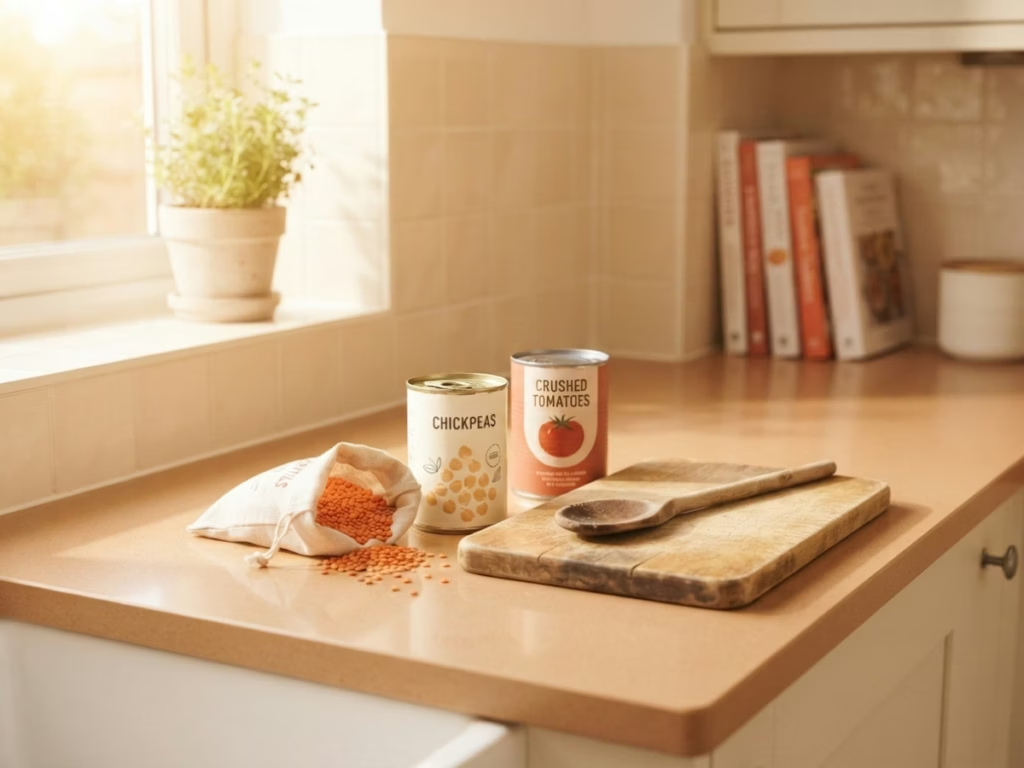
Cooking from your pantry at least twice a week means those cans of chickpeas and bags of lentils have a job. They’re not inventory, they’re next Tuesday’s dinner. And the produce that’s about to go sideways in your fridge? It now has a vehicle to go out in: the fried rice, the quesadillas, the curry.
If you’re looking for more ways to rescue the fridge before it becomes a compost situation, this post on what to cook when the fridge looks empty is a natural next step.
The Missing Piece: Knowing What You Actually Have
The reason most people don’t cook from their pantry isn’t motivation, it’s visibility. You don’t know if you have white beans. You think you’re out of coconut milk. You’re pretty sure there’s pasta but you can’t remember what kind. And by the time you’ve done a full pantry audit at 5:30 p.m. with two people asking when dinner is, the window for cooking has passed and you’ve ordered delivery. Again.
That’s the loop Pantidy is built to break. It’s a smart pantry app for iOS and Android that tracks what’s in your pantry, fridge, and freezer, with expiration dates, quantities, and storage location, and matches your current inventory to recipes you’ve personally saved. The “Use Expiring” view alone changes dinner planning: instead of guessing what needs to get used first, it shows you, and shows you which of your saved recipes uses it.
Try Pantidy free for 14 days, then $5 a month. Worth approximately one bag of lentils you didn’t know you had.
How to Build Your Default Pantry Stack
The goal isn’t to have a perfect pantry. It’s to have a reliable pantry, one where you can reliably produce dinner without thinking too hard. That means stocking the five categories from earlier at a level that covers roughly two weeks of fallback meals.
A workable starting list, if you’re building from scratch:
- Dried pasta (two shapes, one long, one short)
- White rice and red lentils
- Canned tomatoes (crushed and diced)
- Canned chickpeas, white beans, and black beans
- Canned tuna (four or five cans)
- Olive oil and a neutral oil
- Soy sauce and vinegar (red wine or white wine)
- Bouillon cubes or paste
- Onions and a head of garlic (check the onion shelf life and garlic shelf life if you’re not sure how long yours have been sitting there)
- Dried spices: cumin, paprika, red pepper flakes, oregano, turmeric
That’s roughly twenty to twenty-five items. Most of them last six months to two years.
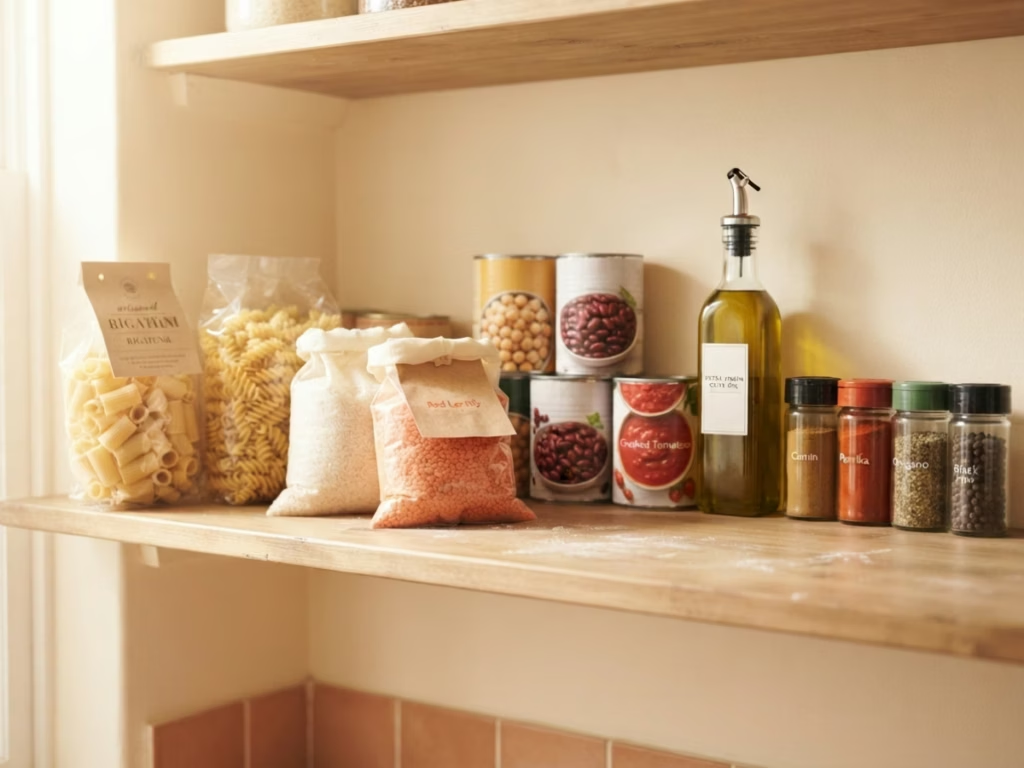
All ten dinners above live somewhere in that list. And for more on cooking confidently from a limited pantry, the cooking for one / half-recipe pantry hack is worth bookmarking.
Frequently Asked Questions
What are the most versatile pantry staples for weeknight dinners?
Canned beans (chickpeas, white beans, black beans), dried pasta, rice, canned tomatoes, and olive oil are the five categories that cover the widest range of weeknight meals. Garlic and dried spices do most of the flavor work from there. With those on hand, you can produce soup, curry, pasta, stew, or grain bowls without a grocery run.
How much can you actually save by cooking from the pantry instead of ordering delivery?
A pantry dinner from staples you already own typically costs a small fraction of what delivery runs, and that’s before you factor in fees and tip. The bigger number is what you stop wasting: the average American spent over $760 on uneaten food in 2024, per ReFED. Cooking from existing inventory directly cuts into that figure.
Can pantry dinners work for picky eaters or kids?
The most reliable pantry meals for mixed households are the ones with familiar textures: pasta with any sauce, quesadillas, fried rice, and simple soups. The key is building around one or two things the family already likes and treating the pantry as a flavor layer on top. Black bean quesadillas with mild spices tend to be an easy win (results vary by household, age, and current mood of the five-year-old).
How do I know which pantry items are about to expire before they become waste?
This is where the mental load gets heavy, trying to remember when you opened the dried lentils, or how long the olive oil has been in that cabinet. Pantidy tracks expiration dates for everything in your pantry, fridge, and freezer and flags what needs to be used first, so you can plan dinner around actual expiration data rather than optimistic guesses.
Are pantry-only dinners nutritionally complete?
Most of the ten meals in this list include protein (legumes, tuna, eggs), complex carbohydrates (pasta, rice, lentils), and healthy fat (olive oil). Adding frozen vegetables to any of them, fried rice, curry, soup, stew, rounds out the nutritional profile without requiring fresh produce. Sardines and canned tuna specifically are high in omega-3s. These aren’t compromise meals.
One Thing to Do Tonight
Open your pantry and pull out every can and bag that’s been pushed to the back. Line them up on the counter. Pick the meal from this list that matches what’s there with the fewest missing ingredients.
That’s dinner. It’s cheaper than delivery, it takes less time than you think, and the thing that was quietly heading toward the $760 statistic is now on the table instead.
Food Waste Calculator
How much food are you throwing away?
The average household wastes about 30% of the food they buy. See what that costs you.
You’re throwing away about
$0
per year in wasted food
Pantry + Recipes
From "What's in the Fridge?" to Dinner in Minutes
Pantidy is a smart pantry app on iOS and Android that tracks what you have, flags what's expiring, and matches your inventory to recipes you've already saved.
- See every recipe you can make right now
- Filter for recipes that use expiring items first
- Check ingredient match percentages at a glance
- Add missing items to your shopping list in one tap