
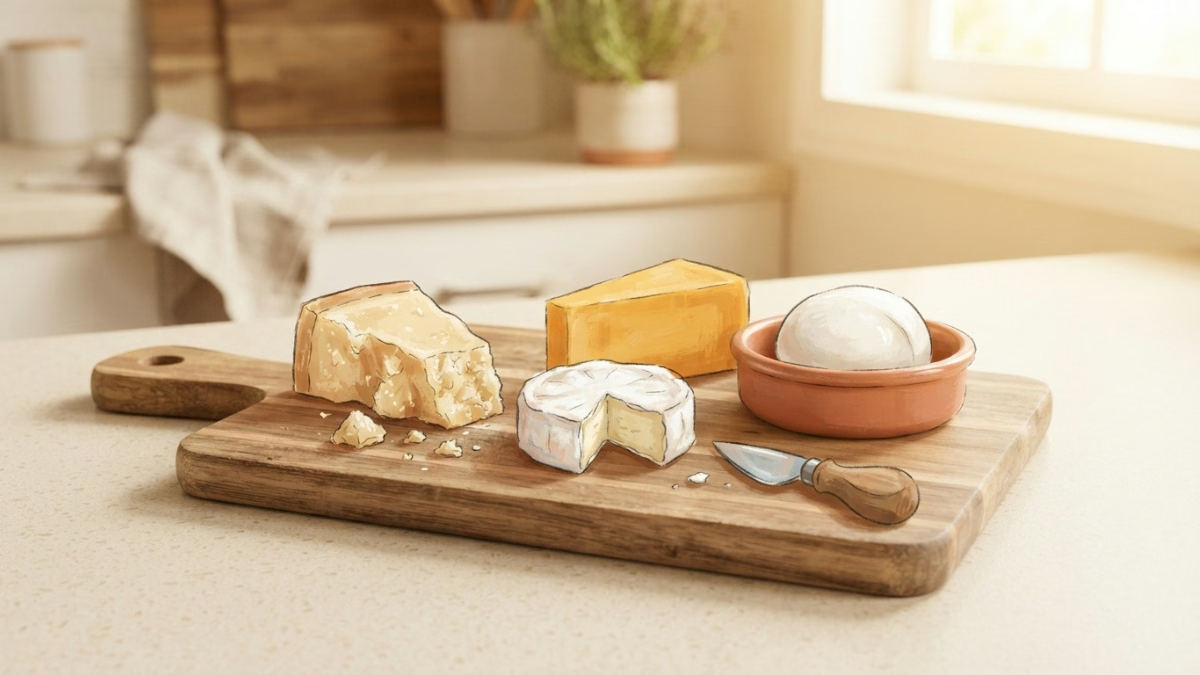
Cheese is one of the most wasted items in the average fridge. Not because people don’t love it, but because it comes in a dozen different forms that all behave differently, and “keep it cold” is about as useful as “drive safe.” The right method depends on whether you’ve got a block of aged cheddar, a wedge of brie, or a ball of fresh mozzarella sitting in its little bath of water.
The short answer: all cheese belongs between 35 and 40°F, wrapped tightly to block air, in a fridge drawer that insulates it from both warm spots and strong-smelling neighbors, per Clemson’s food safety guide. Hard cheeses like cheddar last 3-4 weeks after opening; soft cheeses like brie or fresh mozzarella last 1-2 weeks, per The Food Keeper. Everything else in this guide is the nuance that keeps those windows real instead of optimistic.
This guide covers how to store cheese to prevent mold across every type, with exact timelines after opening.
Key Takeaways:
- Hard cheeses such as cheddar or Swiss last 3-4 weeks after opening when wrapped tightly and kept at 35-40°F.
- Soft cheeses including brie and fresh mozzarella should be eaten within 1-2 weeks of opening and never left unrefrigerated for more than two hours.
- Block parmesan lasts up to 6 months unopened and 3-4 weeks after opening.
- Double-wrapping cheese and placing it in a sealed container after each use is the most reliable way to prevent mold.
- Storing cheese in a fridge drawer rather than on a shelf protects it from odor transfer and maintains more consistent humidity.
Why the Drawer Matters as Much as the Wrap
Most people shove cheese on a random shelf next to leftovers and hope for the best. That’s not a storage strategy, that’s a countdown.
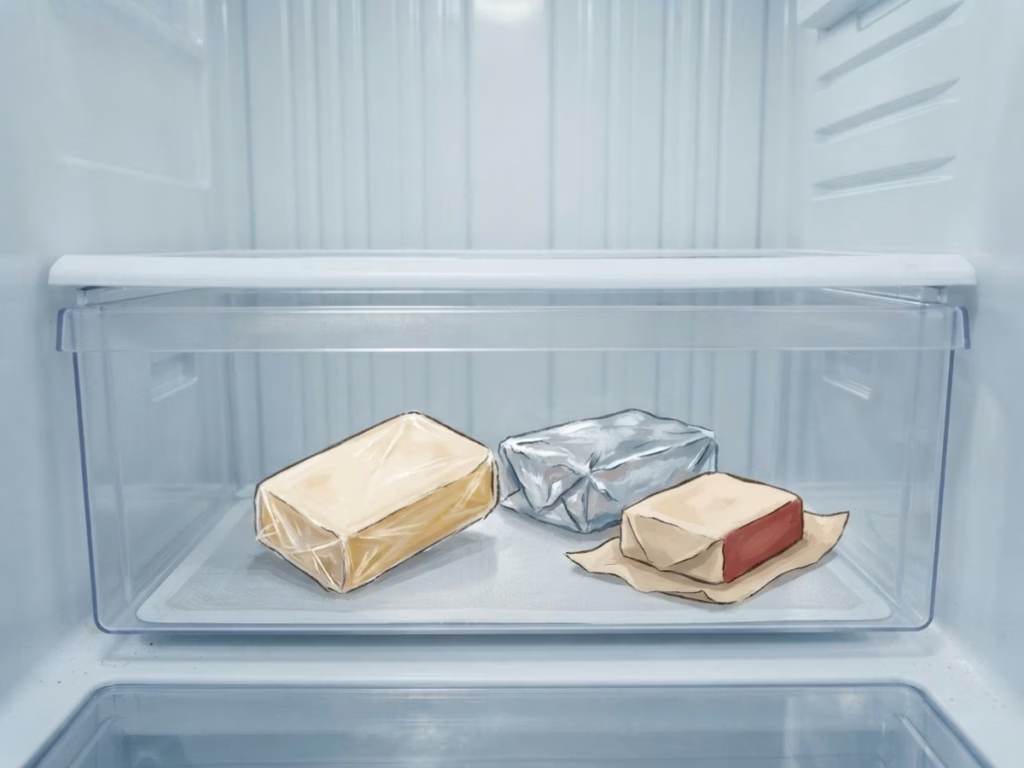
The fridge drawer is the right home for cheese for two reasons. First, it runs slightly cooler and more consistently humid than the open shelves, which is exactly what cheese wants. Second, it creates physical separation from everything that smells, your week-old takeout, the cut onion in a bowl, the lunch meat you opened three days ago. Strong-smelling foods share their flavor with exposed cheese faster than you’d think, and nobody wants their gruyère tasting like garlic dill pickles. Cheese fridge drawer storage is one of the simplest upgrades most people skip.
Clemson’s food safety guidance is explicit on this: keep cheese in a refrigerator drawer at 35-40°F, and if a cheese has a particularly assertive smell (looking at you, brie), wrap it well and stash it in a separate sealed container so it doesn’t draft the whole fridge.
The temperature range matters too. Warmer than 40°F and you’re accelerating bacterial growth. Colder than 35°F and soft cheeses can get crumbly and weepy in ways they weren’t designed for. An $8 fridge thermometer will tell you whether your drawer is actually hitting that range. It is almost always worth checking.
Hard Cheeses: The Forgiving Ones (With Limits)
Cheddar, Swiss, gouda, manchego, gruyère: these are the workhorses of most cheese drawers. They’ve had most of their moisture aged out of them, which means mold has less of a foothold and you have more time.
After opening, hard cheeses like cheddar or Swiss are good for 3-4 weeks when kept properly wrapped, per The Food Keeper. That’s a real window, not a conservative one, but only if you’re wrapping them right each time you cut a piece.
Here’s how to actually do it:
Keep the original packaging as long as you can. Cheese manufacturers know what they’re doing with those waxed or vacuum-sealed wrappers. Leave it in there until you open it (Clemson).
After opening, wrap tightly. Plastic wrap pressed directly against the cut surface with no air pockets, or foil, or both. The enemy is air exposure. Every air pocket is a place where moisture accumulates and mold starts its very ambitious life goals.
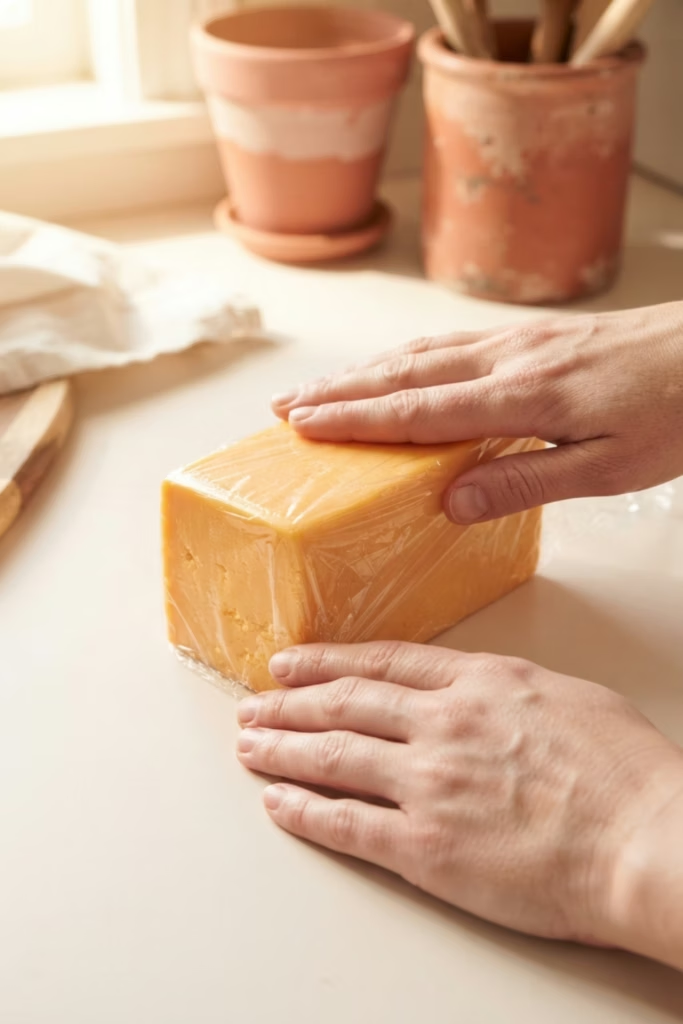
Double up. Wrap the cheese, then put it in a zip-top bag or a small container with a lid. This is what actually gets you to the full 3-4 week window rather than opening the drawer in week two to find a blue-grey situation on the corner.
One note on pre-shredded cheese: it has a shorter window than block because the greater surface area gives mold more to work with. If you’re buying cheddar specifically to have it around for a few weeks, buy the block and shred what you need.
Parmesan: The Outlier with the Longest Game
Block parmesan deserves its own section because it’s genuinely different from other hard cheeses. Unopened, it can last up to 6 months in the fridge. Once you open it, you’re looking at 3-4 weeks, same as cheddar or Swiss, per The Food Keeper.
That 6-month window is one of the reasons a block of parmesan is usually a smarter buy than a bag of the pre-grated stuff, even when the bag looks cheaper per ounce at a glance. The block keeps longer, tastes better, and you control the texture when you grate it.
The pre-grated stuff in the green shaker can, to be clear, is a processed product with added cellulose and preservatives. It behaves differently. Store it according to its own label.
For block parmesan storage: wrap the cut face in plastic, then foil, then into the drawer. Parmesan’s low moisture means it handles this kind of treatment well. If a small spot of surface mold appears on a hard aged parmesan, you can cut it off with an inch to spare in all directions and use the rest. (For the full picture on what to do when mold shows up on cheese, the can you eat moldy cheese guide covers it thoroughly.)
Soft Cheeses: The Two-Week Clock
Brie, camembert, fresh mozzarella, ricotta, cottage cheese, cream cheese. This is where the quick-spoil reputation of cheese comes from. The higher moisture content that makes them taste that way also makes them a much more welcoming environment for bacteria and mold.
The Food Keeper puts soft cheeses like brie and fresh mozzarella at 1-2 weeks after opening. That’s it. Plan accordingly.
Practical rules for soft cheeses:
Don’t leave them out. Soft cheeses should be back in the fridge within two hours of sitting out, per FMI consumer guidance. That’s the food safety line, not a suggestion. A brie sitting out through a three-hour dinner party and a round of after-dinner board games is a brie you should be cautious about.
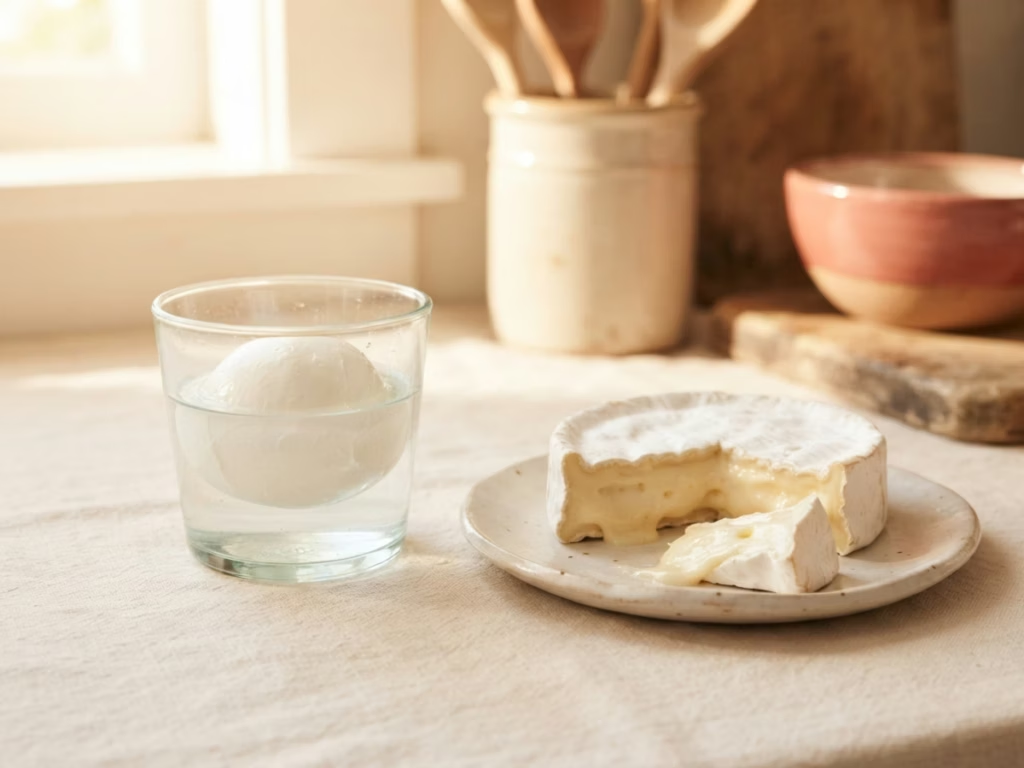
Fresh mozzarella lives in liquid. If you bought the ball in water, keep it in that liquid in the fridge. If you’ve opened the package and used part of it, cover the remainder in fresh cold water or lightly salted water in a container with a lid. Drain and pat it dry when you’re ready to use the next piece.
Ricotta and cottage cheese go in their original container, sealed. These are wet cheeses and they’re unforgiving. If the container’s seal is broken, press plastic wrap directly against the surface of the cheese before putting the lid back on.
Enjoying this?
Eat more of what you buy.
One short email a week. Preservation tricks, ingredient deep-dives, and the small kitchen habits that can quietly save $700+ a year on food waste. Pinky promise: no spam.
Cream cheese stores the same way: sealed tight, plastic wrap touching the surface if the original foil seal is gone.
One hard truth about soft cheese: by the time you notice it’s off, it’s really off. Check the texture and smell before you use it. If it smells sour beyond its usual tang, or if the texture has gone slimy, it’s done.
Semi-Soft Cheeses: The Middle Child
Havarti, fontina, muenster, monterey jack. These land between hard and soft on the moisture scale and behave accordingly. Figure on 2-3 weeks after opening with proper wrapping. The same double-wrap approach works: plastic against the cut face, foil or bag over that.
If you’re using a semi-soft for melting (jack in quesadillas, muenster in a melt), you’re probably going through it fast enough that the window isn’t the constraint. If you’re buying a wedge of havarti for a cheese board and then it lives in the drawer for three weeks getting sliced piece by piece, wrap it carefully each time.
The Processed and Shelf-Stable Exception
American slices, Velveeta-style blocks, some individually wrapped cheese products. These are engineered to be shelf-stable or semi-stable in ways that natural cheese isn’t.
A processed cheese product belongs in the pantry only if the package explicitly says it’s shelf-stable. Otherwise, refrigerate it like everything else. This sounds obvious, but the confusion is real, individually wrapped cheese slices look like they might be fine at room temperature because of the hermetic sealing. Check the label. Don’t assume.
How to Actually Track All of This
Here is where most households fall apart. You open a block of cheddar on a Wednesday, make sandwiches, rewrap it, put it back, and then completely forget when you opened it. Three weeks later you find it, and the question becomes: was that three weeks or four? Was it the cheddar you opened before the trip or after?
Memory is not a reliable expiration tracker. We’ve established this with the three identical dark chili powders that live in my spice cabinet (I will not be taking questions).
Pantidy is a smart pantry app on iOS and Android that tracks what you have, where it’s stored, and when it’s expiring, so when you open a block of parmesan, you log it once and the app tells you when it’s getting close. No memory required. Try it free for 14 days.
How to Store Cheese to Prevent Mold: The Actual Mechanics
Understanding why mold grows on cheese helps you prevent it more systematically than following rules by rote.
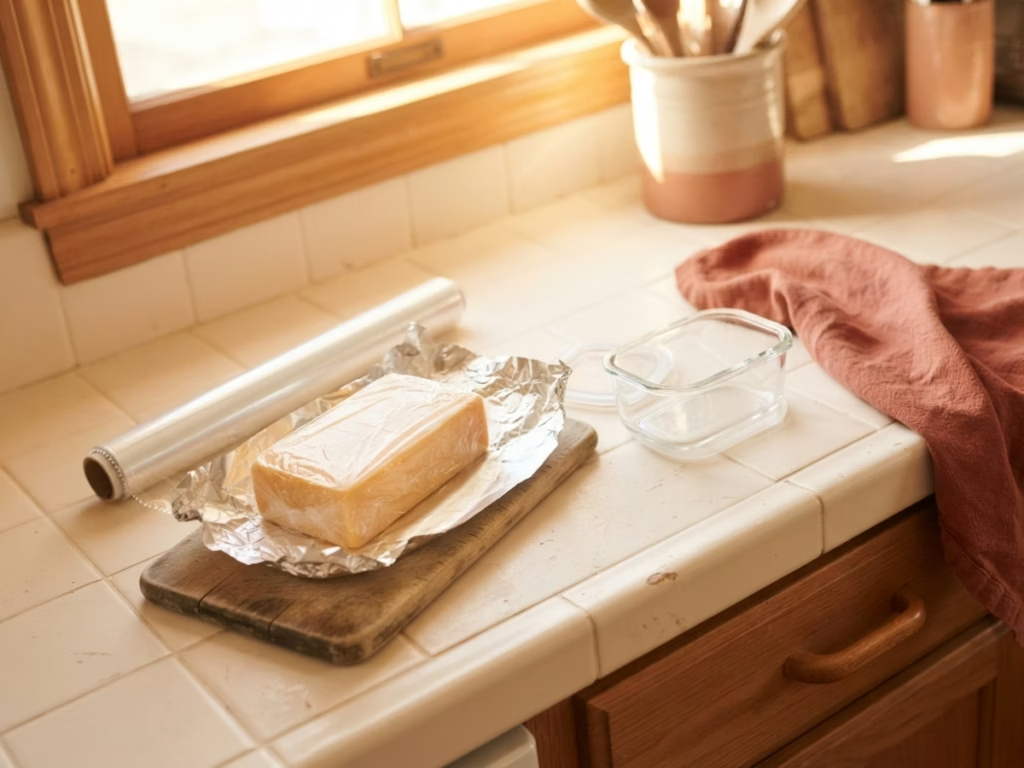
Mold needs moisture, air, and a surface to colonize. Hard cheeses have less moisture, which is why they’re more resistant. Soft cheeses have more, which is why they’re not. Every storage decision you make is either giving mold what it wants or denying it.
Air pockets in the wrapping are the main culprit. Even a small gap between the plastic wrap and the cut surface of the cheese is enough for mold to get started. Press the wrap directly against the cheese. No wrinkles, no tunnels.
Reusing wrapping spreads mold spores. When you unwrap a piece of cheese, cut what you need, and rewrap it, use fresh wrap each time. The old wrap has been exposed to your hands, the cutting board, the air. Fresh wrap keeps the surface clean.
The double container move is underrated. Wrap the cheese, then put it in a small sealed container. This does two things: it adds another barrier, and it keeps any ambient fridge odors away from the cheese. Particularly useful for softer cheeses and anything that’s been open for more than a week.
Check before you wrap. Run a quick visual check each time you open a cheese. A tiny spot of mold caught early on a hard cheese is a knife problem, not a throw-it-out problem. A fuzzy colony that’s been growing for two weeks is a different situation. (Again, the can you eat moldy cheese guide is the reference for those judgment calls.)
Frequently Asked Questions
How long does cheese last after opening?
It depends on the type. Hard cheeses like cheddar or Swiss last 3-4 weeks after opening when kept tightly wrapped at 35-40°F, per The Food Keeper and Clemson’s food safety guide. Soft cheeses like brie and fresh mozzarella last 1-2 weeks. Block parmesan lands at 3-4 weeks after opening regardless of its much longer unopened shelf life.
What is the best way to store cheese in the fridge?
Keep cheese in a fridge drawer at 35-40°F, in its original packaging until first use, per Clemson. After opening, wrap the cut face tightly in plastic film or foil with no air pockets, then place the wrapped cheese in a sealed container or bag. Use fresh wrap each time you cut a piece.
How do you prevent cheese from molding?
Double-wrap it and seal it in a container after each use. Mold needs air and moisture to take hold, so pressing fresh plastic wrap directly against the cut surface removes the air pocket where mold starts. Keeping strong-smelling cheeses in their own separate container also prevents cross-contamination of odors and spores.
Can you freeze cheese to make it last longer?
Most hard and semi-hard cheeses can be frozen, though texture tends to get crumbly after thawing, which makes them better suited for cooking than slicing. Soft cheeses like brie and fresh mozzarella don’t freeze well, the texture changes substantially. If you’re going to freeze cheese, wrap it tightly in plastic and then foil, freeze in smaller portions you’ll use in one go, and plan to use it in cooked applications.
Is it safe to eat cheese that’s been left out for a few hours?
Soft cheeses should not be left unrefrigerated for more than two hours, per FMI. That’s the food safety threshold. Hard cheeses are more forgiving because of their lower moisture content, but they still shouldn’t sit on a board all afternoon and then go back in the fridge for another two weeks. When in doubt, if it’s been out longer than two hours and it’s a soft cheese, let it go.
One Thing to Do Today
Open your fridge drawer and pull out every piece of cheese.
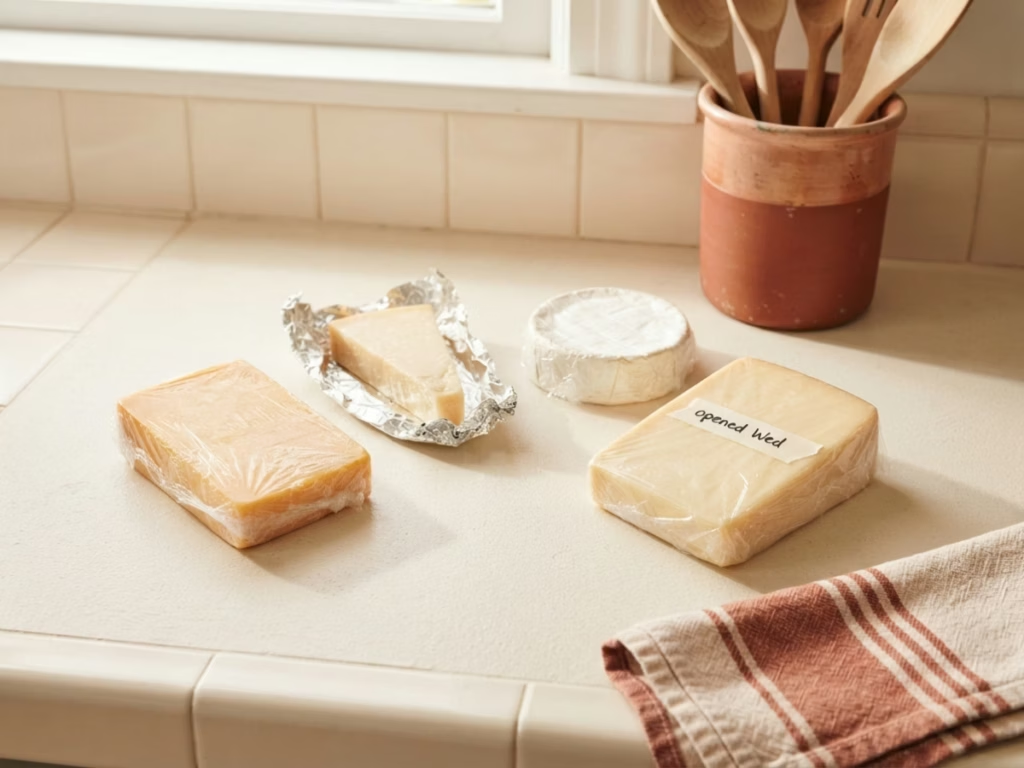
Check the wrapping on each one. If there are air pockets, loose folds, or original packaging that’s been opened and just refolded rather than resealed, fix it now with fresh plastic wrap and a bag or container over the top.
While you’re in there, if you can’t remember when you opened something, write today’s date on a piece of masking tape and stick it to the container. It takes ten seconds and it means next week you’ll know whether you’re still in the window or past it.
That’s the whole move. Two minutes in the drawer, every piece of cheese rewrapped properly, and you’ve just extended the life of everything in there. Cheaper than buying new cheese. Way cheaper than throwing out the old.
Food Waste Calculator
How much food are you throwing away?
The average household wastes about 30% of the food they buy. See what that costs you.
You’re throwing away about
$0
per year in wasted food
Pantry + Recipes
From "What's in the Fridge?" to Dinner in Minutes
Pantidy is a smart pantry app on iOS and Android that tracks what you have, flags what's expiring, and matches your inventory to recipes you've already saved.
- See every recipe you can make right now
- Filter for recipes that use expiring items first
- Check ingredient match percentages at a glance
- Add missing items to your shopping list in one tap