
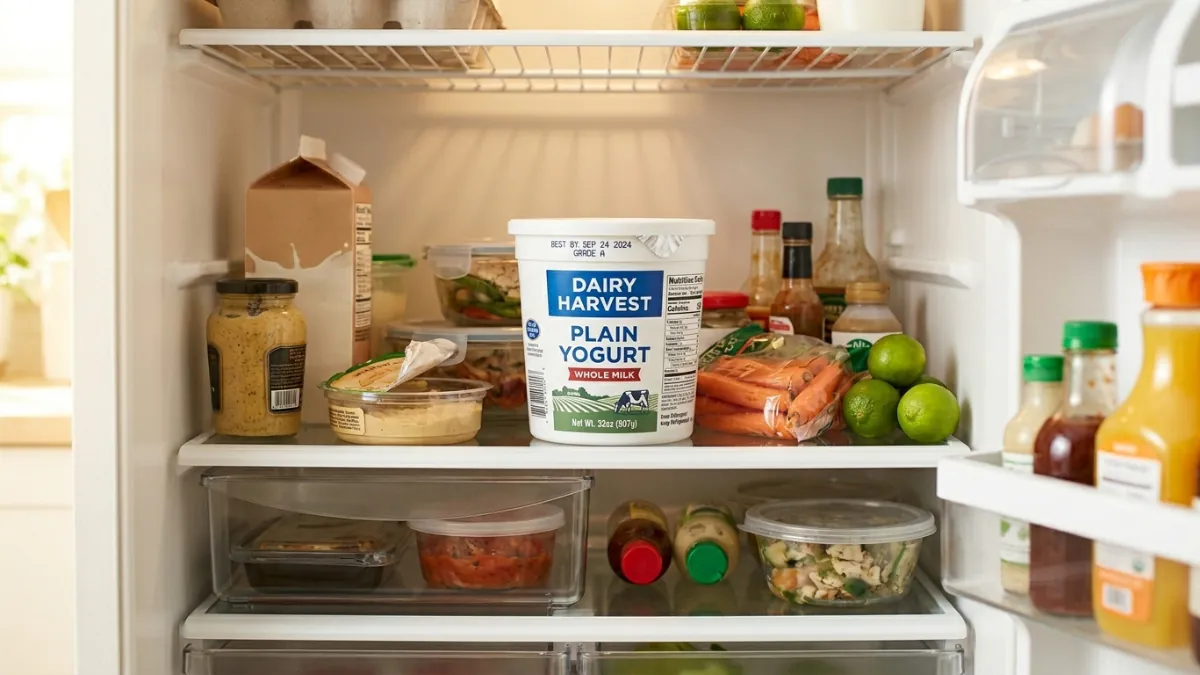
Yes, you can often eat yogurt after its printed date. A ‘Best if Used By’ label is about quality, not safety. A properly refrigerated yogurt is generally safe for 1 to 2 weeks from purchase, regardless of what the package says.
That yogurt in the back of your fridge with a date from last Tuesday is probably fine. The printed date on most yogurt is a quality marker, not a safety countdown. According to Too Good To Go, a “Best if Used By” label tells you when the manufacturer thinks the product tastes best, not the exact moment it turns dangerous. The real rule: properly refrigerated yogurt is generally safe for 1 to 2 weeks from the purchase date, label or no label.
So no, you don’t need to throw it out just because the date flipped.
Key Takeaways:
- The USDA FoodKeeper guidance cited by Houston Methodist says refrigerated yogurt is safe to eat within 1 to 2 weeks of the purchase date, even if the printed date has passed.
- ‘Best if Used By’ is a quality label, not a safety cutoff. An unopened yogurt stored correctly can still be safe after that date.
- Yogurt left out at room temperature for more than 2 hours should be discarded; the limit drops to 1 hour when temperatures hit 90°F or above.
- Visible mold is a hard stop. Toss the whole container, not just the moldy part.
- Freezing yogurt before it expires extends its usable life by 1 to 2 months, per USDA FoodKeeper guidance cited by Houston Methodist.
Expired Yogurt: The Date on the Lid Is Not a Safety Timer

Most yogurt containers carry a “Best if Used By” or “Sell By” date. These are quality signals. Yogurt safety after a sell by date comes down to one thing: how it was stored, not what the label says. The manufacturer is telling you when the flavor and texture are at their peak, not when the yogurt becomes a biohazard.
Most people toss expired yogurt the day the date flips. That’s usually a mistake. Houston Methodist’s guidance puts it plainly: if the yogurt has been stored correctly in the fridge, it can still be safe to eat within 1 to 2 weeks of purchase. An unopened container that’s been sitting properly at 40°F or below? Good chance it’s still fine a few days past the printed date.
What actually matters is what happened to the yogurt between the store shelf and your spoon.
The Two Situations Where You Actually Toss It

It sat out too long. This is the real danger zone, and it has nothing to do with the printed date. U.S. Dairy’s guidance is clear: yogurt left at room temperature for more than 2 hours should be thrown out. If the room is 90°F or hotter, that window shrinks to 1 hour. Brunch spreads, beach coolers, the yogurt you forgot on the counter while you were on a call. Gone.
The sneaky part: harmful bacteria can grow even when the yogurt still smells and looks completely normal. As the CDC puts it (quoted by Houston Methodist), you “can’t taste, smell or see the germs that cause food poisoning.” So the sniff test is a start, not a verdict.
It shows visible mold. Too Good To Go is direct here: visible mold means the whole container goes. Not just the top layer. The whole thing.
Some watery separation pooling at the surface is normal (that’s whey, not a warning sign). Excessive liquid, a sour smell that’s sharper than usual, or any fuzzy growth? That’s your actual signal to toss.
Enjoying this?
Eat more of what you buy.
One short email a week. Preservation tricks, ingredient deep-dives, and the small kitchen habits that can quietly save $700+ a year on food waste. Pinky promise: no spam.
How to Make Yogurt Last Longer

Two habits that genuinely help: always use a clean spoon, and reseal the container tightly after every use. Houston Methodist’s guidance calls both out specifically. Introducing bacteria from a used spoon speeds up spoilage faster than the calendar does.
And if you’ve got a container you won’t finish in time, freeze it. USDA FoodKeeper data cited by Houston Methodist says frozen yogurt stays fresh for 1 to 2 months. The texture gets a little grainy after thawing (not ideal for eating straight, fine for smoothies or baking), but that’s a fair trade for not throwing out $5 of Greek yogurt. We’ve all done it (more than once, if we’re being honest). We don’t need to keep doing it.
If keeping track of what’s expiring in your fridge feels like a second job, Pantidy is a pantry management app for iOS and Android that logs expiration dates and shows you what to use before it goes bad. Free to try for 14 days, then $5 a month.
Frequently Asked Questions
Is it safe to eat expired yogurt?
Often yes, if it’s been stored correctly. A “Best if Used By” date is a quality marker, not a safety deadline. Houston Methodist’s guidance notes that refrigerated yogurt is generally safe within 1 to 2 weeks of the purchase date. The bigger risk is yogurt that sat out too long, not yogurt with a date from last week.
How long is yogurt good after the expiration date?
If it’s been refrigerated continuously and unopened, it can still be safe for several days past the printed date. USDA FoodKeeper guidance cited by Houston Methodist suggests a 1 to 2 week window from purchase as the practical guideline. Once opened, use it within that same window and keep it sealed between uses.
How can you tell if yogurt has gone bad?
Visible mold is the clearest sign. Discard the entire container if you see any, per Too Good To Go. A sharper-than-usual sour smell or excessive liquid separation are also warning signs. That said, dangerous bacteria can be present even when yogurt looks and smells normal, so storage time and temperature matter more than sensory checks alone.
Can you freeze yogurt before it expires?
Yes, and it’s a practical move if you won’t finish it in time. USDA FoodKeeper data cited by Houston Methodist puts the freezer window at 1 to 2 months. Expect a grainier texture after thawing, which makes it better suited for smoothies or baking than eating straight from the container.
What’s the difference between “Best if Used By” and an expiration date?
“Best if Used By” is about peak quality, not safety. Our article Does Canned Food Actually Expire? A Guide to Pantry Safety explains that manufacturers set this date to indicate when flavor and texture are at their best. A true expiration date is a harder safety line, but most dairy products in the U.S. carry quality dates, not safety expiration dates.
Check the yogurt in your fridge right now. If it’s been refrigerated the whole time, hasn’t been left out, and shows no mold, it’s almost certainly still good. Eat it today and save yourself the $5 replacement.
Food Waste Calculator
How much food are you throwing away?
The average household wastes about 30% of the food they buy. See what that costs you.
You’re throwing away about
$0
per year in wasted food
Pantry + Recipes
From "What's in the Fridge?" to Dinner in Minutes
Pantidy is a smart pantry app on iOS and Android that tracks what you have, flags what's expiring, and matches your inventory to recipes you've already saved.
- See every recipe you can make right now
- Filter for recipes that use expiring items first
- Check ingredient match percentages at a glance
- Add missing items to your shopping list in one tap